


Table of Contents
- Elon Musk Private Jet Controversy Overview
- The Aircraft: Gulfstream G650ER Specifications
- How Flight Tracking Works: ADS-B Technology
- ElonJet Account: The Twitter Tracking Controversy
- Twitter Account Suspension & Policy Changes
- Carbon Emissions & Environmental Impact
- Privacy vs Transparency Debate
- Legal Aspects: Public Data & Flight Tracking
- Other Celebrity Jet Tracking Accounts
- Current Tracking Methods Post-Ban
- Frequently Asked Questions
Elon Musk Private Jet Controversy Overview
The Elon Musk private jet tracking controversy emerged as one of the most prominent intersections of technology, privacy, transparency, and social media policy in modern aviation. The dispute centers on automated Twitter accounts tracking Musk’s Gulfstream G650ER movements using publicly available flight data, creating tension between aviation transparency advocates and privacy concerns from the world’s wealthiest individual.
Jack Sweeney, a University of Central Florida student, created the @ElonJet Twitter account in 2020 using publicly available ADS-B (Automatic Dependent Surveillance-Broadcast) data to track and automatically post updates about Elon Musk’s private aircraft movements. The account gained over 500,000 followers before Musk’s 2022 Twitter acquisition dramatically altered the trajectory of flight tracking discourse.
According to Protocol aviation tracking analysis, the controversy highlights fundamental tensions between public right-to-know regarding emissions and resource consumption by ultra-wealthy individuals versus reasonable privacy expectations for personal security and family safety.
The issue extends beyond a single Twitter account, raising questions about aviation transparency, FAA regulations permitting flight data access, climate accountability for high-emission private aviation, and platform moderation policies when owners have personal stakes in content decisions.
The Aircraft: Gulfstream G650ER Specifications

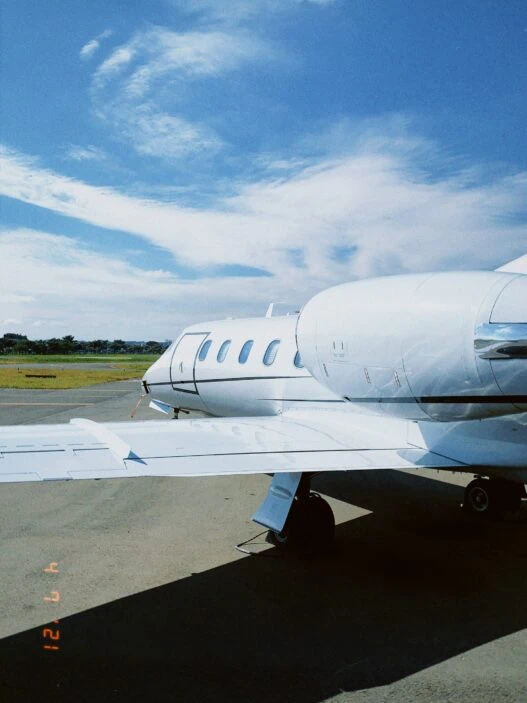
Elon Musk operates a Gulfstream G650ER, representing one of aviation’s most capable and expensive ultra-long-range business jets. Understanding the aircraft provides context for the tracking controversy and emissions calculations central to the debate.
Aircraft Performance and Capabilities
The Gulfstream G650ER (Extended Range) provides maximum range of 7,500 nautical miles (13,890 kilometers) enabling nonstop flights on routes like Los Angeles to London, San Francisco to Tokyo, or New York to Hong Kong. The aircraft cruises at Mach 0.85 (approximately 925 km/h) at altitudes up to 51,000 feet, well above commercial airline traffic.
Maximum takeoff weight reaches 103,600 pounds with cabin altitude maintained at 4,100 feet when flying at maximum ceiling, reducing passenger fatigue on ultra-long flights. The aircraft accommodates 2-4 crew and 11-18 passengers depending on configuration, though Musk’s specific interior layout remains private.
According to Gulfstream Aerospace specifications, the G650ER entered service in 2014 with list price exceeding $70 million, representing top tier of business aviation before Gulfstream G700 and G800 introductions in 2022-2024.
Operating Costs and Economics
Gulfstream G650ER operating costs range $4,000-5,500 per flight hour including fuel, maintenance, crew, insurance, and hangar expenses. Typical transcontinental flight consuming 4-5 flight hours costs $20,000-27,500 in direct operating expenses, excluding capital costs and depreciation.
Annual fixed costs including insurance, hangar, crew salaries, and scheduled maintenance total $1.5-2.5 million for aircraft flying 300-400 hours yearly. Total annual ownership costs reach $4-6 million for typical business jet utilization patterns.
Fuel consumption averages 450-500 gallons per hour, translating to 1,800-2,000 gallons for typical 4-hour transcontinental flight. At $6-8 per gallon Jet-A pricing, fuel costs alone exceed $11,000-16,000 per transcontinental segment.
Aircraft Registration and Identification
Elon Musk’s Gulfstream G650ER carries tail number N628TS, registered to a Delaware trust providing ownership privacy while complying with FAA registration requirements. The registration approach follows standard practice among ultra-high-net-worth individuals seeking to obscure direct ownership connections while maintaining legal compliance.
ADS-B transponder broadcasts from N628TS transmit position, altitude, speed, and heading data enabling air traffic control tracking and collision avoidance. This publicly accessible data forms the foundation enabling automated tracking accounts despite ownership privacy structures.
How Flight Tracking Works: ADS-B Technology

Understanding ADS-B technology explains why Elon Musk private jet tracking proves technically straightforward despite privacy preferences, and why complete tracking prevention requires regulatory changes rather than personal security measures.
ADS-B Technology Fundamentals
Automatic Dependent Surveillance-Broadcast represents mandatory aviation technology requiring all aircraft operating in most controlled airspace to broadcast real-time position data. The system transmits aircraft identification, GPS position, altitude, velocity, and heading at one-second intervals on 1090 MHz frequency.
ADS-B serves critical safety functions enabling air traffic controllers to monitor aircraft with greater precision than traditional radar while providing collision avoidance data to other equipped aircraft. The FAA mandated ADS-B Out equipment for all aircraft in most US airspace effective January 2020, making the technology ubiquitous across commercial and private aviation.
According to FAA NextGen ADS-B program documentation, the open-broadcast architecture deliberately prioritizes safety and transparency over privacy, assuming aircraft operators accept position data accessibility as tradeoff for enhanced situational awareness.
Public Data Access and Aggregation
Multiple organizations operate ADS-B receiver networks capturing broadcast data and making it publicly accessible. FlightAware, FlightRadar24, and ADS-B Exchange aggregate data from thousands of ground receivers covering most inhabited regions globally.
Aviation enthusiasts operate home receivers costing $20-200 feeding data to aggregation networks, creating distributed surveillance covering airspace that traditional radar cannot reach. The crowdsourced model makes comprehensive flight tracking economically viable and resistant to centralized blocking efforts.
Data accessibility varies by platform. FlightRadar24 and FlightAware honor FAA privacy programs (LADD, PIA) blocking certain aircraft from public display. ADS-B Exchange explicitly rejects blocking requests, maintaining that legally transmitted public data should remain publicly accessible regardless of owner preferences.
Automated Tracking Bot Development
Jack Sweeney developed automated systems monitoring specific aircraft tail numbers and posting updates to social media when movements occur. The bot tracks takeoff/landing timing, departure/arrival airports, flight duration, and estimated routes based on ADS-B data.
Carbon emissions estimates derive from aircraft type fuel consumption rates multiplied by flight duration, providing approximate environmental impact calculations. The methodology lacks precision regarding actual fuel loads, routing efficiency, and passenger counts but delivers order-of-magnitude accuracy sufficient for comparative analysis.
ElonJet Account: The Twitter Tracking Controversy
The @ElonJet Twitter account exemplifies tensions between technology-enabled transparency and personal privacy preferences of public figures utilizing significant resources with environmental implications.
Account Creation and Growth
Jack Sweeney launched @ElonJet in June 2020 as college project applying programming skills to publicly available aviation data. The account gained traction as Musk’s public profile increased through Tesla valuation growth, SpaceX achievements, and controversial Twitter presence.
By late 2021, @ElonJet accumulated over 100,000 followers with media coverage framing the account as environmental accountability tool highlighting private aviation emissions inconsistent with Musk’s clean energy advocacy through Tesla and solar ventures. The account attracted climate activists, Musk critics, and aviation enthusiasts monitoring high-profile aircraft movements.
Elon Musk privately messaged Sweeney in January 2022 offering $5,000 to shut down the account citing “security reasons.” Sweeney counter-offered $50,000 or Tesla internship, which Musk declined. The exchange became public, dramatically increasing @ElonJet visibility and follower count exceeding 500,000 by mid-2022.
Content and Posting Patterns
@ElonJet automatically posted when N628TS departed or arrived at airports, including location, timestamp, flight duration, and estimated carbon emissions. Posts included maps showing approximate routes and comparisons to average car emissions or commercial flight alternatives.
The account never disclosed real-time position during flight, instead posting only after landing with historical flight path data. This approach addressed security concerns about enabling real-time stalking while maintaining transparency regarding completed movements and cumulative emissions.
Media Coverage and Public Interest
Mainstream media coverage portrayed @ElonJet as grassroots accountability project highlighting wealth inequality and environmental hypocrisy. Progressive outlets emphasized climate justice angles while libertarian perspectives defended Sweeney’s use of public data against powerful individual seeking to suppress information.
The controversy intensified when Elon Musk acquired Twitter in October 2022, creating direct conflict between platform owner’s personal privacy preferences and stated commitment to free speech absolutism. The situation tested Musk’s principles regarding content moderation and personal interests.
Twitter Account Suspension & Policy Changes
Elon Musk’s December 2022 suspension of @ElonJet and related tracking accounts created one of the most controversial moderation decisions in Twitter history, highlighting tensions between ownership interests and platform neutrality principles.
Initial Suspension and Justification
On December 14, 2022, Twitter suspended @ElonJet and numerous other accounts tracking celebrity private jets including accounts following Taylor Swift, Mark Zuckerberg, Jeff Bezos, and Bill Gates. Elon Musk justified the action citing “doxxing” policy violations despite accounts posting only publicly available flight data without personal information.
Twitter simultaneously implemented new policy prohibiting “live location information” including real-time flight tracking, though @ElonJet posted only historical data after flights completed. The policy change appeared specifically crafted to justify suspending tracking accounts rather than addressing genuine doxxing concerns.
According to The Verge platform policy analysis, the suspensions contradicted Musk’s previous statements about Twitter protecting legal speech and not removing accounts merely because owner disliked content.
Policy Inconsistencies and Criticism
Critics noted selective enforcement where celebrity jet tracking violated policy while accounts sharing real-time positions of military aircraft, commercial flights, and other public figures remained active. The inconsistency suggested personal motivation rather than principled safety policy.
Elon Musk claimed physical safety threats against family resulted from tracking accounts, though no evidence emerged linking @ElonJet data to actual security incidents. The FAA and law enforcement confirmed no formal complaints or investigations related to flight tracking accounts.
European Union officials questioned whether suspensions violated Digital Services Act provisions requiring transparent, non-arbitrary content moderation. The controversy highlighted regulatory challenges when platform owners make content decisions affecting their personal interests.
Reinstatement and Modified Policies
Following backlash, Twitter reinstated some suspended accounts with modified policies permitting delayed flight information (24+ hour lag) while prohibiting real-time or near-real-time tracking. The compromise attempted to balance transparency interests with security concerns, though critics argued flight data loses accountability value when substantially delayed.
@ElonJet migrated to alternative platforms including Mastodon, Threads, and Bluesky where tracking continues without restrictions. The multi-platform strategy demonstrates that platform-specific bans prove ineffective when data remains publicly accessible and alternative distribution channels exist.
Carbon Emissions & Environmental Impact
[IMAGE 3: Elon Musk private jet carbon emissions environmental impact CO2 data celebrity aviation climate debate analysis]
Environmental accountability motivates significant tracking interest, particularly given Elon Musk’s public positioning around climate change and clean energy advocacy through Tesla and solar businesses.
Emissions Calculations and Methodology
Gulfstream G650ER burns approximately 450-500 gallons per flight hour, producing roughly 4.5-5.0 metric tons CO2 per hour based on standard aviation fuel emissions factors. A typical 4-hour transcontinental flight generates 18-20 metric tons CO2, equivalent to average American’s annual emissions from all sources.
Annual emissions from Musk’s private aviation vary based on utilization but estimates suggest 300-500 flight hours yearly producing 1,350-2,500 metric tons CO2. This exceeds average American’s annual emissions by 150-300 times, though Musk argues his impact through Tesla and SpaceX climate initiatives vastly outweighs personal aviation emissions.
According to Transport & Environment private jet emissions research, ultra-wealthy individuals’ private aviation emissions per capita exceed 10,000 times the average person’s flight emissions despite representing less than 0.001% of global population.
Comparison to Commercial Aviation
Flying private produces 5-14 times higher emissions per passenger versus commercial first class on equivalent routes due to load factor differences. A Gulfstream G650ER with single passenger generates 100+ kilograms CO2 per passenger per 100km versus 7-15 kg for commercial first class and 3-5 kg for economy.
However, private aviation enables time efficiency unavailable via commercial service. A Los Angeles-New York roundtrip via commercial aviation requires full travel days each direction including ground transport, security, connections, and delays. Private aviation compresses the same journey to hours, creating productivity arguments justifying emissions for high-value individuals.
Climate Accountability Arguments
Tracking advocates argue ultra-wealthy individuals disproportionately contributing to climate change through discretionary private aviation should face public accountability, particularly when simultaneously profiting from or advocating for climate solutions. The transparency enables informed public discourse about inequality and environmental justice.
Opponents counter that personal aviation represents trivial fraction of global emissions, that targeting individuals deflects from systemic industrial emissions, and that climate progress requires technological innovation Musk enables through Tesla and SpaceX rather than personal consumption constraints.
Privacy vs Transparency Debate
The Elon Musk private jet controversy crystallizes fundamental tensions between privacy rights and transparency expectations for public figures consuming significant resources.
Privacy Arguments and Security Concerns
Privacy advocates argue that even public figures deserve reasonable expectations against real-time location tracking enabling stalking, harassment, or physical security threats. While flight data is legally public, automated aggregation and distribution to large audiences creates qualitatively different privacy invasion than historic aviation enthusiast tracking.
Ultra-high-net-worth individuals face legitimate kidnapping, extortion, and security risks that tracking exacerbates. Family members traveling on aircraft become security vulnerabilities when location data broadcasts publicly. The argument holds that safety justifies reasonable privacy accommodations even for public data.
However, critics note Elon Musk’s security concerns appear selective given his prolific social media presence broadcasting locations, event attendance, and travel patterns far more precisely than delayed flight tracking provides. The inconsistency suggests privacy arguments mask reputational concerns about emissions accountability.
Transparency and Accountability Arguments
Transparency advocates maintain that ultra-wealthy individuals wielding enormous economic and political power should accept greater scrutiny regarding resource consumption and environmental impact. When private aviation emissions vastly exceed average citizens’, public accountability serves climate justice and informed policy debate.
The argument holds that legally public data should remain publicly accessible regardless of subject preferences. If flight tracking creates genuine security concerns, regulatory changes should apply uniformly rather than selective platform moderation benefiting powerful individuals.
Public interest in tracking extends beyond emissions to business intelligence (executive travel indicating merger discussions, partnership negotiations), political accountability (lobbying trips, political donor meetings), and media verification (confirming location claims by public figures).
Middle Ground Approaches
Potential compromises include delayed tracking (posting data 24-48 hours after flights), aggregated emissions reporting without specific flight details, or enhanced FAA privacy programs making blocking requests more accessible. However, each approach faces technical and philosophical challenges balancing competing interests.
Legal Aspects: Public Data & Flight Tracking
The legality of Elon Musk private jet tracking remains clear despite controversy, though regulatory frameworks may evolve addressing privacy concerns versus transparency interests.
First Amendment and Public Data
US courts consistently hold that publishing lawfully obtained public information enjoys First Amendment protection absent narrow exceptions like national security or ongoing criminal investigations. Aviation tracking uses FAA-mandated broadcasts explicitly designed for public reception, creating strong legal foundation for tracking accounts.
No federal statute prohibits receiving, aggregating, or publishing ADS-B data despite FAA privacy programs (LADD, PIA) requesting voluntary non-display. These programs carry no legal force, instead relying on voluntary compliance by tracking platforms—which ADS-B Exchange explicitly rejects.
According to Electronic Frontier Foundation legal analysis, attempts to criminalize public data aggregation would face severe constitutional challenges under both First Amendment free speech protections and established precedents regarding information in public domain.
Platform Terms of Service vs. Legal Rights
While tracking enjoys legal protection, social media platforms maintain authority to restrict content through terms of service regardless of legality. Twitter’s suspension of @ElonJet proved legally permissible despite contradicting free speech principles Musk espoused.
Platform discretion creates situation where legal activity faces restriction based on owner preferences, raising questions about power concentration when few platforms dominate public discourse. Migration to alternative platforms demonstrates limits of platform-specific restrictions when underlying data remains accessible.
Potential Regulatory Changes
FAA could theoretically restrict ADS-B data accessibility through regulatory changes, though such action would undermine safety benefits motivating mandatory equipage. European regulators considering privacy frameworks may restrict tracking differently than US approaches prioritizing transparency.
Aircraft owners could pursue blocking through expanded LADD participation or alternative identification schemes obscuring ownership connections, though technical limitations and safety requirements constrain complete anonymity. Regulatory evolution will likely balance safety imperatives against privacy accommodations.
Other Celebrity Jet Tracking Accounts
Elon Musk represents only one of numerous celebrity jet tracking accounts highlighting broader pattern of ultra-wealthy private aviation creating transparency interest.
Taylor Swift Tracking Controversy
Taylor Swift’s private jet tracking gained significant attention during 2024 when emissions calculations suggested her aircraft produced over 8,000 metric tons CO2 annually through frequent touring-related flights. Swift’s representatives threatened legal action against tracking accounts, though legal experts confirmed no viable claims existed against public data aggregation.
The controversy intensified when Swift dated high-profile athlete requiring frequent cross-country flights during NFL season. Media coverage framed tracking as environmental accountability for celebrity with young, climate-conscious fanbase, creating reputational pressure distinct from Musk’s situation.
Other High-Profile Tracking Targets
Accounts tracking Mark Zuckerberg, Jeff Bezos, Bill Gates, Kim Kardashian, and other celebrities operate across multiple platforms. Some ultra-wealthy individuals ignore tracking while others pursue platform-specific blocking or FAA privacy programs with mixed effectiveness.
Political figures including presidents, congressional leaders, and foreign officials face flight tracking enabling accountability regarding taxpayer-funded travel, lobby connections, and foreign relationships. Government aircraft tracking generally receives less resistance given public funding and transparency expectations.
Broader Aviation Tracking Community
Beyond celebrity focus, aviation enthusiasts track military aircraft, rare/historic planes, and unusual flights out of pure interest rather than political motivation. The community predates celebrity tracking by decades, viewing aviation transparency as fundamental to hobby and safety culture.
Military aircraft tracking provides open-source intelligence regarding deployments, training activities, and covert operations that governments prefer remaining confidential. The tension between OSINT capabilities and operational security creates ongoing debate about appropriate transparency boundaries.
Current Tracking Methods Post-Ban
Despite Twitter restrictions, Elon Musk private jet tracking continues through alternative platforms and methodologies demonstrating limited effectiveness of platform-specific content policies.
Alternative Platform Migration
@ElonJet and similar accounts migrated to Mastodon, Threads, Bluesky, and Telegram where tracking continues unrestricted. The decentralized nature of alternative social media prevents centralized moderation, while encrypted messaging apps enable private tracking communities sharing data outside public platforms.
Website-based tracking through personal blogs or dedicated flight tracking sites provides platform-independent alternatives though with reduced social media engagement and discovery. These approaches demonstrate that accessible public data proves difficult to suppress through platform policies alone.
Direct ADS-B Exchange Access
ADS-B Exchange maintains real-time tracking of all broadcasting aircraft including celebrity jets regardless of blocking requests. Users can bookmark specific tail numbers for monitoring without automated social media posting, achieving same transparency with reduced platform risk.
Mobile apps including ADS-B Exchange app provide push notifications when tracked aircraft becomes airborne, delivering functionality equivalent to suspended Twitter bots without platform content policy constraints. The technical accessibility ensures tracking capability persists regardless of social media policies.
Crowdsourced Observation Networks
Aviation enthusiast communities coordinate through Discord, Reddit, and private forums sharing observations of celebrity aircraft at airports. These grassroots networks compile arrival/departure data independently of automated tracking, creating resilient distributed surveillance resistant to centralized suppression.
The manual observation approach predates ADS-B technology and continues alongside automated tracking, demonstrating that celebrity aviation activity proves difficult to conceal when aircraft operate through public airports with aviation enthusiast presence.
Frequently Asked Questions
What kind of private jet does Elon Musk own?
Elon Musk owns a Gulfstream G650ER, one of the world’s most capable ultra-long-range business jets with 7,500 nautical mile range enabling nonstop flights on routes like Los Angeles-London or San Francisco-Tokyo. The aircraft lists for over $70 million and seats 11-18 passengers in luxury configuration. The G650ER cruises at Mach 0.85 at altitudes up to 51,000 feet with cabin altitude maintained at 4,100 feet reducing fatigue. Operating costs range $4,000-5,500 per flight hour including fuel, maintenance, crew, and insurance. Musk’s aircraft carries tail number N628TS registered to Delaware trust for privacy while broadcasting ADS-B position data enabling public tracking.
Why was the Elon Musk jet tracker banned on Twitter?
Twitter suspended @ElonJet and related celebrity tracking accounts in December 2022 after Elon Musk acquired the platform, citing new policy against “live location information” despite accounts posting only historical flight data after landings. Musk claimed accounts violated doxxing policies and created security threats to his family, though critics noted selective enforcement and inconsistencies with his stated free speech principles. The suspensions contradicted previous statements about protecting legal speech and appeared personally motivated given account never posted real-time position during flights. Following backlash, Twitter modified policy permitting delayed tracking with 24+ hour lag while maintaining restrictions on near-real-time data.
How much CO2 does Elon Musk’s private jet produce?
Elon Musk’s Gulfstream G650ER produces approximately 4.5-5.0 metric tons CO2 per flight hour based on 450-500 gallon hourly fuel consumption and standard aviation emissions factors. A typical 4-hour transcontinental flight generates 18-20 metric tons CO2, equivalent to average American’s annual emissions from all sources. Annual emissions vary by utilization but estimates suggest 300-500 flight hours yearly producing 1,350-2,500 metric tons CO2 total, exceeding average American’s annual emissions by 150-300 times. Private aviation produces 5-14 times higher emissions per passenger versus commercial first class on equivalent routes due to load factor differences, though productivity arguments justify emissions for high-value individuals.
Is tracking Elon Musk’s private jet legal?
Yes, tracking Elon Musk’s private jet using publicly available ADS-B data is completely legal under US law. Aircraft broadcast position data through FAA-mandated transponders specifically designed for public reception to support air traffic control and collision avoidance. Courts consistently hold that publishing lawfully obtained public information enjoys First Amendment protection absent narrow exceptions. No federal statute prohibits receiving, aggregating, or publishing ADS-B data despite FAA voluntary privacy programs requesting non-display. While social media platforms can restrict tracking accounts through terms of service, the underlying tracking activity itself faces no legal prohibition. Aviation tracking predates celebrity interest by decades as fundamental aspect of aviation safety culture and enthusiast community.
How does private jet tracking work?
Private jet tracking uses ADS-B (Automatic Dependent Surveillance-Broadcast) technology requiring all aircraft in most controlled airspace to broadcast real-time position data. Aircraft transmit identification, GPS position, altitude, velocity, and heading at one-second intervals on 1090 MHz frequency. Enthusiasts operate home receivers costing $20-200 feeding data to aggregation networks including FlightAware, FlightRadar24, and ADS-B Exchange covering most inhabited regions. Automated systems monitor specific tail numbers and post updates when movements occur, calculating emissions based on aircraft type and flight duration. Data accessibility varies by platform with some honoring FAA blocking requests while ADS-B Exchange maintains all legally transmitted data should remain publicly accessible regardless of owner preferences.
Can you still track Elon Musk’s jet after Twitter ban?
Yes, Elon Musk’s jet remains trackable through multiple methods despite Twitter account suspensions. @ElonJet migrated to alternative platforms including Mastodon, Threads, Bluesky, and Telegram where tracking continues unrestricted. ADS-B Exchange website provides real-time tracking of tail number N628TS without blocking, with mobile apps offering push notifications when aircraft becomes airborne. Aviation enthusiast communities coordinate through Discord and Reddit sharing manual observations from airports. The decentralized nature of public ADS-B data and multiple distribution platforms ensures tracking capability persists regardless of single-platform content policies. Users can bookmark specific tail numbers on tracking websites for direct monitoring without relying on social media intermediaries.
Why does Elon Musk care about jet tracking?
Elon Musk cites security concerns for himself and family as primary motivation opposing jet tracking, claiming real-time location data enables stalking or physical threats. However, critics note selective privacy concerns given his prolific social media presence broadcasting locations and travel patterns more precisely than delayed flight tracking. Environmental accountability likely motivates opposition, as tracking highlights private aviation emissions inconsistent with climate advocacy through Tesla and solar businesses. Tracking generates negative publicity regarding wealth inequality and resource consumption, creating reputational risks beyond genuine security threats. The controversy intensified when Musk acquired Twitter, creating direct conflict between personal privacy preferences and stated free speech principles, testing whether platform ownership would influence content moderation decisions affecting personal interests.
Charter Private Jets with Cryptocurrency
While you can’t track celebrity jets anymore on Twitter, you can charter your own private aircraft through PrivateCharterX. Book Gulfstream, Bombardier, and other luxury jets with Bitcoin, Ethereum, or USDC. Charter Private Jets →
✈️ Global Fleet Access | 🔒 Crypto Payments | 🌍 Worldwide Destinations
The Future of Private Aviation Transparency
The Elon Musk private jet tracking controversy represents broader tension between technology-enabled transparency and privacy expectations in an increasingly connected world. As ADS-B technology becomes universal and crowdsourced tracking networks expand, aviation movements prove increasingly difficult to conceal regardless of wealth or political influence.
The debate will likely intensify as climate accountability pressures increase and wealth inequality becomes more politically salient. Ultra-wealthy individuals’ discretionary emissions face growing scrutiny even as their climate investments potentially offset personal consumption through systemic change.
Regulatory frameworks may evolve providing enhanced privacy accommodations while preserving safety benefits motivating public ADS-B broadcasts. Alternative identification schemes, delayed data releases, or aggregated reporting could balance competing interests, though fundamental tension between transparency and privacy persists.
For aviation industry stakeholders, the controversy highlights need for thoughtful approaches balancing legitimate security concerns against public interest in accountability. Platform policies will continue testing boundaries of content moderation when owners have personal stakes in decisions.
The democratization of flight tracking through accessible technology and distributed data networks ensures aviation transparency will persist regardless of individual preferences. Whether tracking serves environmental accountability, aviation safety, public interest journalism, or privacy invasion depends on perspective—but technical and legal reality makes suppression increasingly impractical.
For broader context on private aviation and celebrity aircraft usage, explore our comprehensive guide to celebrity private jets including detailed aircraft specifications and charter options.
Sources
- Protocol – Elon Musk Private Jet Tracking Controversy Analysis
- Gulfstream Aerospace – G650ER Aircraft Specifications
- FAA NextGen – ADS-B Program Documentation
- The Verge – Twitter ElonJet Suspension Analysis
- Transport & Environment – Private Jet Emissions Research
- Electronic Frontier Foundation – Flight Tracking First Amendment Analysis
- ADS-B Exchange – Real-Time Flight Tracking Platform