





Table of Contents
- ITA Airways Overview: Italy’s Aviation Rebirth
- From Alitalia Collapse to ITA Airways Launch
- Fleet: Modern Airbus A350 & A320neo Family
- Route Network: Rome Hub Strategy
- Business Class: Magnifica Service
- SkyTeam Alliance Membership Benefits
- Pricing Strategy: Competing in European Market
- Volare Frequent Flyer Program
- Lufthansa Acquisition & Future Integration
- Customer Experience & Service Quality
- Frequently Asked Questions
ITA Airways Overview: Italy’s Aviation Rebirth
ITA Airways (Italia Trasporto Aereo) launched operations on October 15, 2021, as Italy’s new national carrier following the collapse and liquidation of Alitalia after decades of financial struggles and failed restructuring attempts. The airline represents the Italian government’s latest effort to maintain national carrier presence competing against European aviation giants including Lufthansa, Air France-KLM, and British Airways.
Starting with initial fleet of 52 aircraft, ITA Airways began operations significantly smaller than Alitalia’s final size, focusing on profitable routes and modern fleet rather than attempting to replicate predecessor’s unsustainable network. The airline adopted clean-slate approach avoiding Alitalia’s accumulated debts, union contracts, and operational inefficiencies that plagued the previous carrier for years.
According to Reuters aviation industry analysis, ITA Airways received €1.35 billion in Italian government financing during initial phase, creating competitive concerns from other European carriers claiming state aid violations. The European Commission approved the funding with conditions limiting ITA’s market share and requiring eventual privatization.
The airline’s name “ITA” intentionally avoids “Alitalia” branding to distance from predecessor’s negative reputation for delays, strikes, and poor service quality. The fresh brand identity targets younger travelers and international passengers unfamiliar with Alitalia’s troubled history while maintaining Italian national carrier positioning important for government and business travel.
From Alitalia Collapse to ITA Airways Launch
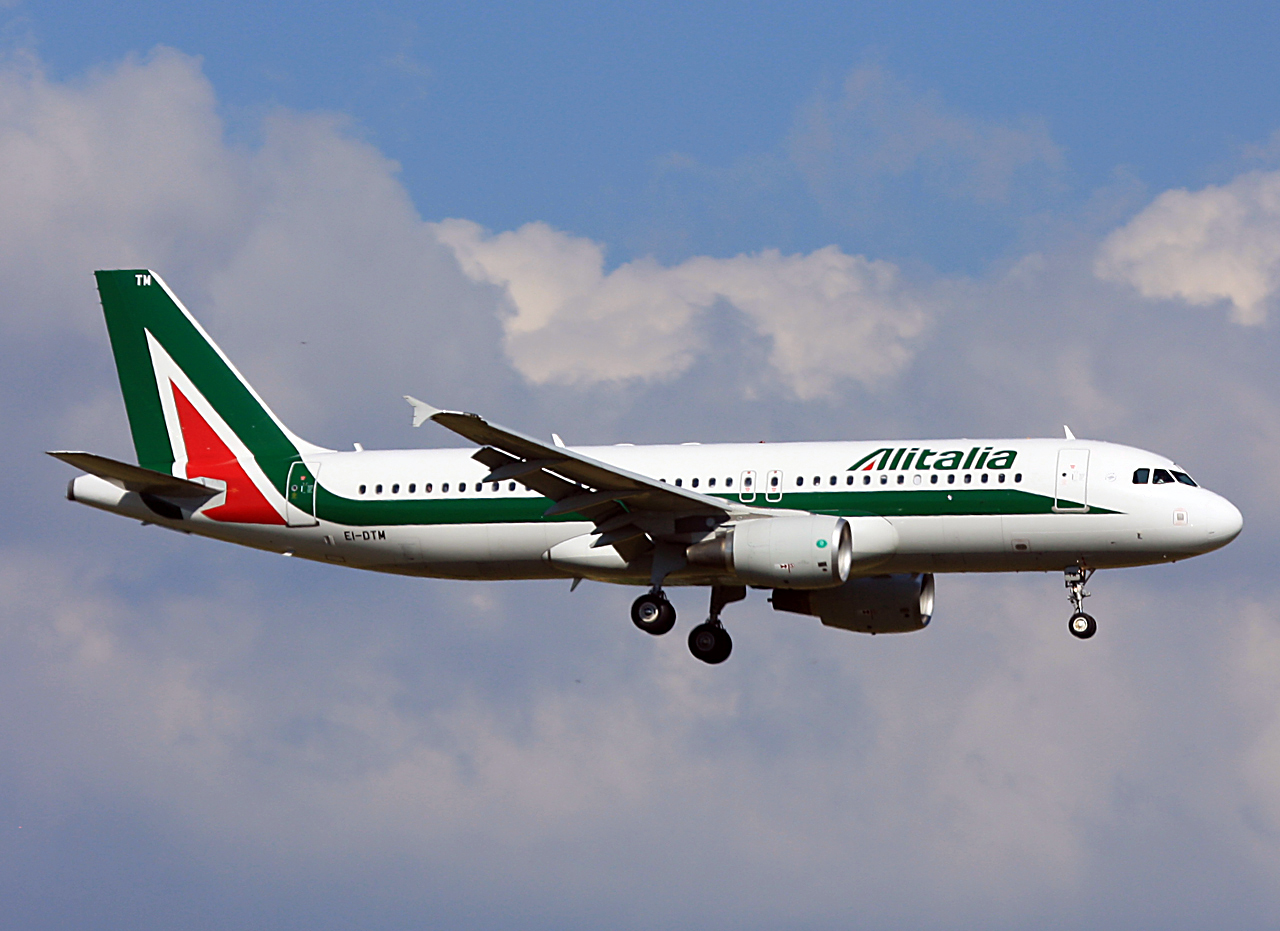
Understanding ITA Airways requires context of Alitalia’s decades-long decline and multiple failed rescue attempts consuming billions in government subsidies without achieving sustainable profitability.
Alitalia’s Decline and Final Collapse
Alitalia operated as Italy’s flag carrier from 1946 through 2021, experiencing periodic financial crises requiring government bailouts throughout its history. The airline never achieved consistent profitability in deregulated European aviation market, struggling against low-cost carriers and larger European network airlines with superior economies of scale.
Multiple restructuring attempts including 2008 privatization to Air France-KLM and 2017 emergency administration failed to create viable business model. Chronic labor disputes, inefficient operations, and political interference preventing necessary cost reductions contributed to persistent losses exceeding €10 billion cumulative over final two decades.
COVID-19 pandemic delivered final blow to already-struggling Alitalia, with international travel restrictions eliminating revenue while fixed costs persisted. The Italian government placed airline into extraordinary administration in May 2020, beginning liquidation process while preparing successor carrier avoiding Alitalia’s accumulated liabilities and contractual obligations.
ITA Airways Launch Strategy
ITA Airways launched as entirely new legal entity separate from Alitalia, enabling fresh start without inheriting debts, pension obligations, or union contracts that constrained predecessor. The government created ITA as state-owned company with mandate to achieve profitability within five years or face closure without additional taxpayer support.
Initial fleet comprised 52 modern aircraft versus Alitalia’s final 110+ planes, concentrating on profitable long-haul routes to Americas and select European business destinations. The airline initially employed 2,800 staff versus Alitalia’s 10,000+ at peak, dramatically reducing labor costs through selective hiring and modern contracts.
According to Financial Times restructuring analysis, ITA’s business plan targeted break-even by 2023-2024 through aggressive cost management, premium cabin focus, and selective network development avoiding loss-making routes that plagued Alitalia’s economics.
Continuity vs. Fresh Start Balance
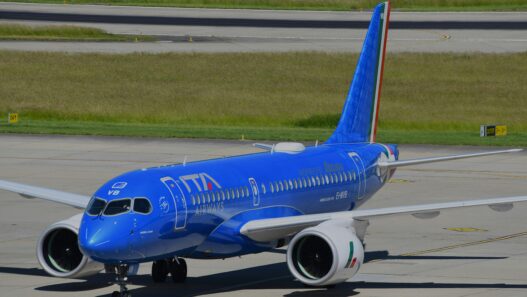
ITA Airways maintained some Alitalia continuity to preserve customer relationships and valuable slots at Rome Fiumicino and Milan Linate airports. The airline adopted similar livery colors (blue and green representing Italian flag) while avoiding direct Alitalia branding. Premium passengers received recognition of Alitalia elite status during transition period, easing loyalty program migration.
However, ITA deliberately avoided Alitalia’s service reputation issues by implementing higher service standards, better crew training, and operational reliability emphasis. The goal involved keeping beneficial brand associations (Italian style, Mediterranean routing) while shedding negative perceptions (delays, strikes, poor reliability) that damaged Alitalia’s market position.
Fleet: Modern Airbus A350 & A320neo Family
ITA Airways operates all-Airbus fleet strategy providing operational efficiency through type commonality and modern fuel-efficient aircraft reducing per-seat costs versus aging Alitalia planes.
Long-Haul Airbus A350 Fleet
ITA Airways selected Airbus A350-900 as long-haul flagship, ordering 28 aircraft for delivery through 2026 replacing Alitalia’s aging Boeing 777 and A330 widebodies. The A350 provides 25% better fuel efficiency than previous-generation widebodies, critical for achieving profitability on transatlantic and intercontinental routes.
A350-900 accommodates 334 passengers in three-class configuration: 33 Magnifica business class, 48 Premium economy, and 253 economy seats. The generous premium cabin allocation (24% of seats) targets high-yield business travelers and premium leisure passengers providing disproportionate revenue share.
According to Airbus A350 specifications, the aircraft offers 8,100 nautical mile range enabling Rome-Los Angeles, Rome-Tokyo, and future Rome-Buenos Aires nonstop operations. Advanced cabin pressurization maintains lower altitude (6,000 feet vs. 8,000 feet typical) reducing passenger fatigue on long flights.
Short/Medium-Haul A320neo Family
ITA operates Airbus A320neo and A321neo for European and Mediterranean network, offering 15-20% fuel savings versus previous-generation A320ceo aircraft Alitalia operated. The neo family features quieter engines and extended range enabling efficient operations on routes from 1-6 hours.
A320neo accommodates 150 passengers while A321neo extends to 200 seats, both configured in two-class layout with business class (recliner seats with blocked middle) and economy. The flexibility enables aircraft optimization by route demand—A320neo for secondary cities, A321neo for high-demand business routes like Rome-Paris or Milan-Frankfurt.
Regional Airbus A220 Plans
ITA Airways ordered 11 Airbus A220-300 aircraft for regional European routes, with deliveries beginning 2024. The A220 provides superior economics on thin routes versus larger A320 family while offering lie-flat business class impossible on turboprops or regional jets competitors operate.
The aircraft seats 140 passengers configured with premium cabin comparable to widebody rather than standard European business class (blocked middle seats). This product differentiation targets business travelers on secondary European routes where competitors offer inferior regional aircraft, creating premium positioning justifying fare premiums.
Fleet Modernization Timeline
ITA’s fleet expansion targets 105 aircraft by 2026, doubling launch size and approaching Alitalia’s final fleet count. However, the modern fuel-efficient fleet provides better economics than Alitalia’s mix of aging 20+ year old aircraft requiring excessive maintenance and burning more fuel per seat.
The rapid fleet growth enables network expansion to underserved Italian cities and increased frequency on profitable routes. However, pilot and crew training capacity constraints may limit growth speed, requiring measured expansion avoiding operational disruption from over-rapid scaling.
Route Network: Rome Hub Strategy
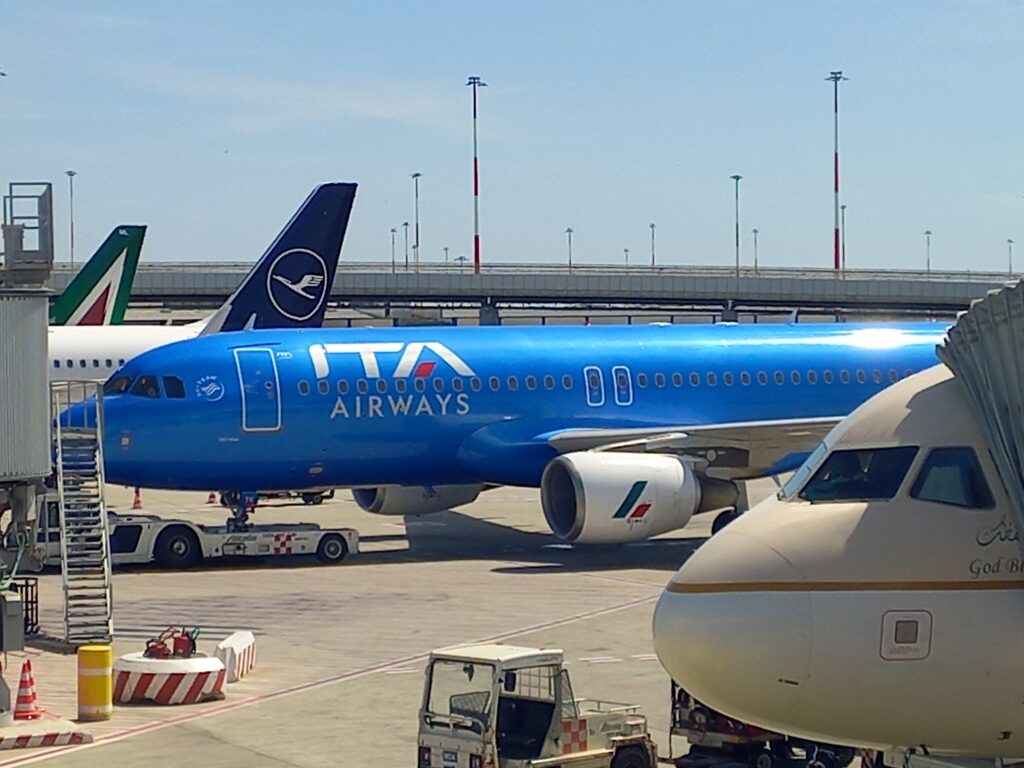
ITA Airways concentrates operations at Rome Fiumicino Airport (FCO) as primary hub, supplemented by Milan Linate, Milan Malpensa, and Venice focus cities creating network coverage across key Italian business and tourism markets.
Rome Fiumicino Hub Development
Rome Fiumicino serves as ITA’s main hub with significant slot holdings and terminal facilities enabling efficient connections between European feeders and long-haul flights to Americas and Asia. The airport’s geographic position in southern Europe provides favorable routing for Mediterranean-Americas traffic versus northern European hubs.
ITA operates substantial domestic network from Rome connecting to Milan, Venice, Naples, Catania, Palermo, and secondary Italian cities. These domestic routes provide feed traffic for international connections while serving point-to-point business and tourism demand. The domestic monopoly on many routes (post-Alitalia exit) enables premium pricing offsetting higher costs versus low-cost carrier competition.
International short-haul network from Rome covers major European business centers including London, Paris, Frankfurt, Madrid, and Brussels with multiple daily frequencies targeting business travelers. Premium cabin focus and schedule quality compete against low-cost carriers dominating leisure European traffic.
Long-Haul Route Development
Transatlantic routes constitute ITA’s most profitable operations, serving New York JFK, Boston, Miami, Los Angeles, São Paulo, and Buenos Aires from Rome. These routes target both connecting traffic from southern Europe and Middle East plus origin-destination Italian diaspora and tourism traffic.
Japan service to Tokyo Narita from Rome serves business travel, luxury tourism, and connecting traffic from Mediterranean to Asia. The route benefits from limited competition on Rome-Tokyo compared to London or Frankfurt where multiple carriers compete intensely.
According to Cirium airline route analysis, ITA’s transatlantic routes achieve 80%+ load factors during peak season with yields 20-30% above European average, demonstrating premium positioning and limited competition advantages versus congested North Atlantic markets from London or Paris.
Milan Operations Split
ITA maintains split Milan operations between city-center Linate Airport for domestic and select European routes, and larger Malpensa for long-haul intercontinental and holiday charter-style seasonal routes. The dual-airport strategy mirrors Alitalia approach but with reduced frequencies reflecting smaller fleet and focused network.
Linate airport proximity to Milan business district (7km vs. Malpensa’s 50km) makes it preferred for business travelers despite limited slot availability and infrastructure constraints. ITA holds valuable Linate slots providing competitive advantage versus international carriers largely excluded from the airport’s restricted operations.
Secondary Italian Cities
Venice, Turin, Bologna, Naples, and other secondary Italian cities receive ITA service primarily to Rome and Milan hubs rather than direct international connections. This hub-feed strategy contrasts with Ryanair and easyJet serving these cities with direct European point-to-point routes at lower fares.
The limited secondary city network reflects ITA’s focus on profitable business and premium leisure traffic rather than attempting to serve entire Italian market across all segments. Low-cost carriers dominate price-sensitive leisure traffic from Italian regions, forcing ITA toward business and premium positioning.
Business Class: Magnifica Service
![ITA Airways business class cabin interior premium seats Italian airline luxury aircraft Airbus A350 first class service]](http://privatecharterx.blog/wp-content/uploads/2026/02/Businnes_Class_Lungo_Raggio_A350-900-scaled.jpg "ITA Airways Guide: Italy's New National Carrier 2026 23")
ITA Airways positions Magnifica business class as premium product emphasizing Italian style, design, and cuisine competing against European legacy carrier business class offerings.
Long-Haul Business Class Product
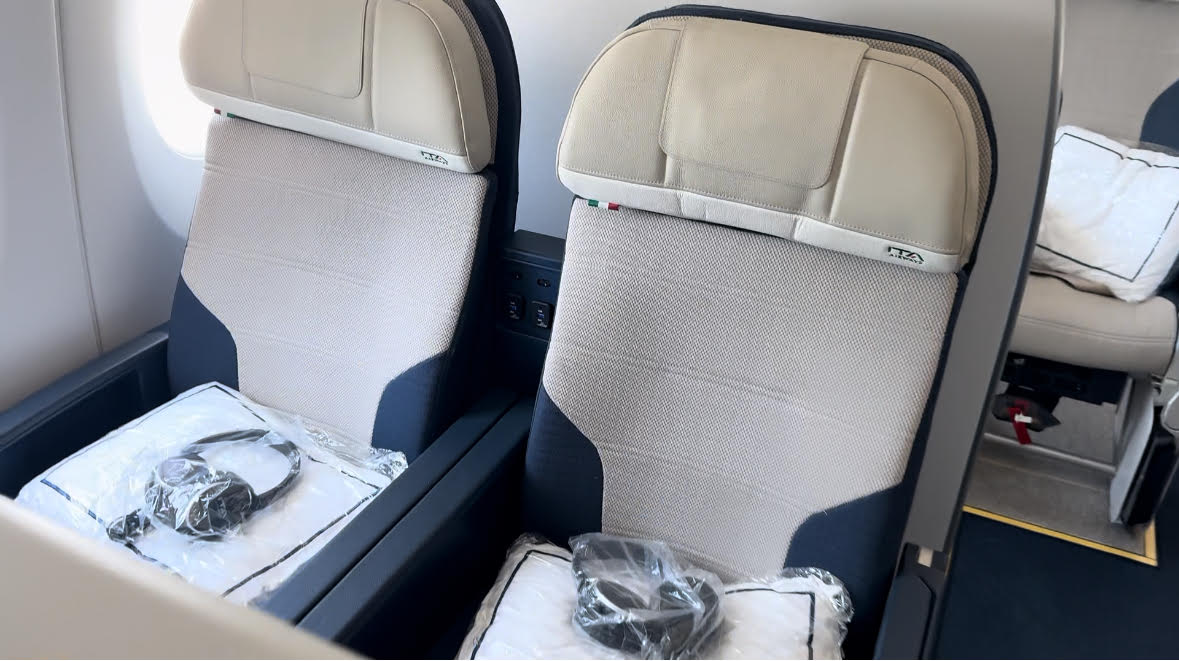
A350-900 business class features 33 fully lie-flat seats in 1-2-1 herringbone configuration providing direct aisle access from every seat. The seats extend 79 inches fully flat with 21-inch width and substantial privacy screens creating personal space comparable to first class on some carriers.
Italian design aesthetic emphasizes leather upholstery, warm colors, and attention to detail reflecting ITA’s positioning around Italian craftsmanship and style. The cabin design by Italian firm Optimares incorporates storage compartments, large entertainment screens, and premium materials differentiating from generic business class products competitors deploy.
In-flight entertainment includes 18-inch high-definition touchscreens with extensive Italian and international content libraries. Passengers receive Bose noise-canceling headphones, AC power outlets, USB charging, and Wi-Fi connectivity enabling productive work environment or entertainment during long flights.
Dining and Beverage Program
Magnifica business class dining emphasizes regional Italian cuisine through partnerships with Italian chefs and suppliers. Multi-course meals feature seasonal ingredients, Italian wines from premium producers, and presentation emphasizing quality over quantity typical of mass airline catering.
According to Business Traveller premium cabin reviews, ITA’s catering receives positive feedback for authentic Italian flavors and thoughtful presentation, differentiating from generic European business class meals competitors offer on same routes.
Beverage program includes Italian sparkling wines, premium spirits, espresso service using Italian coffee rather than standard airline brew, and Italian aperitivi reflecting cultural traditions. The cultural authenticity creates distinctive experience versus competitors’ international business class standards.
Ground Service and Lounges
Magnifica passengers receive priority check-in, baggage handling, and security screening at Rome Fiumicino and Milan airports. Dedicated premium counters and fast-track immigration reduce ground time, particularly valuable for business travelers with tight schedules.
ITA operates Casa Alitalia lounges at Rome Fiumicino (rebranded from Alitalia facilities) offering food, beverages, showers, and business facilities. The lounges provide comfortable environment though reviews suggest quality trails premium European carriers’ flagship lounges including Lufthansa First Class Terminal or Air France La Première lounges.
Short-Haul Business Class
European short-haul business class follows standard European model with economy seats and blocked middle providing extra space rather than unique premium seats. Service includes priority boarding, complimentary food and beverage, and lounge access differentiating from economy despite identical hardware.
The product proves adequate for 1-3 hour European flights where true business class seats would add excessive weight and complexity, though ITA faces pressure from competitors offering similar products at lower price points on leisure-heavy routes.
SkyTeam Alliance Membership Benefits
ITA Airways joined SkyTeam alliance in October 2021 immediately upon launch, providing global network reach through partnerships with Delta Air Lines, Air France-KLM, Korean Air, and 15+ other member carriers.
Connection and Codeshare Benefits
SkyTeam membership enables seamless connections between ITA flights and partner carriers, with single ticketing, through baggage checking, and coordinated schedules. Passengers can book Rome-New York on ITA continuing to Los Angeles on Delta using single ticket with connection protection.
Codeshare agreements allow partners selling ITA flights under their own flight numbers, expanding distribution beyond ITA’s limited global sales presence. This proves particularly valuable in markets like Asia and Latin America where ITA has minimal brand recognition but partners like Korean Air or Aeromexico provide local distribution.
Frequent Flyer Reciprocity
ITA Volare members earn and redeem miles on all SkyTeam carriers, dramatically expanding utility beyond ITA’s limited route network. Elite status recognition provides lounge access, priority services, and bonus miles across SkyTeam members’ global networks.
Reciprocity enables ITA targeting premium European business travelers who previously avoided Alitalia due to limited network and poor loyalty program. SkyTeam membership provides global coverage rivaling Star Alliance (Lufthansa) and Oneworld (British Airways) competing for business traffic.
Competitive Positioning Through Alliance
SkyTeam represents smallest of three global alliances with weaker European presence than Star Alliance’s Lufthansa Group dominance. However, Air France-KLM partnership provides important European coverage while Delta partnership delivers strong North Atlantic feed traffic valuable for ITA’s transatlantic routes.
The alliance enables ITA competing as national carrier despite small size by leveraging partners’ networks. However, pending Lufthansa acquisition may complicate SkyTeam membership if integration into Star Alliance becomes necessary long-term.
Pricing Strategy: Competing in European Market
ITA Airways pricing targets premium business and leisure travelers willing to pay modest premiums over low-cost carriers for better service, schedules, and brand prestige.
Business Class Pricing
Transatlantic business class fares range €2,000-5,000 roundtrip depending on season, advance purchase, and route. Peak summer and Christmas holiday pricing reaches upper range while off-peak winter (excluding holidays) offers substantial discounts targeting leisure upgrade buyers.
Short-haul European business class costs €200-600 premium over economy on routes like Rome-Paris or Milan-London. The pricing proves difficult to justify for leisure travelers when easyJet or Ryanair offer €50-150 total fares, limiting business class to corporate accounts and premium leisure travelers valuing service quality.
Economy Pricing Strategy
Economy fares attempt competing with low-cost carriers while maintaining service quality supporting premium positioning. Domestic Italian routes price 30-50% above Ryanair or easyJet equivalents, justified by better schedules, included baggage, and Rome hub connectivity.
European international routes show similar premium over budget carriers, with Rome-London ranging €150-350 roundtrip versus €50-200 on low-cost alternatives. The premium pricing limits market share to business travelers, connecting passengers, and brand-loyal Italians supporting national carrier.
According to KAYAK airline pricing analysis, ITA’s economy yields (revenue per passenger) exceed European averages by 15-20%, indicating successful premium positioning among passengers willing to pay for service quality and schedule reliability.
Dynamic Pricing and Revenue Management
ITA employs sophisticated revenue management systems adjusting prices based on booking patterns, competitor pricing, and demand forecasts. Last-minute business fares reach extremely high levels while advance purchase leisure fares offer competitive value attracting price-sensitive customers during off-peak periods.
Sales and promotional pricing target specific markets and seasons, with aggressive winter discounts to warm-weather destinations and last-minute business class upgrade offers converting economy passengers to premium cabins at marginal revenue.
Volare Frequent Flyer Program
ITA Airways launched Volare loyalty program replacing Alitalia’s MilleMiglia, offering earning and redemption on ITA flights and SkyTeam partner network.
Elite Tier Structure
Volare features three elite tiers: Volare Silver (25,000 miles), Gold (50,000 miles), and Platinum (75,000 miles annually). Benefits include bonus earning miles, priority check-in and boarding, baggage allowances, and lounge access increasing by tier level.
Elite status recognition across SkyTeam enables benefits on partner airlines including Air France, KLM, Delta, and Korean Air. The reciprocity provides value to members flying mixed ITA and partner itineraries, though earning rates and benefits trail top-tier programs including Lufthansa Miles & More or British Airways Executive Club.
Mileage Earning and Redemption
Members earn miles based on fare class and distance flown, with premium cabins providing 100-150% bonus miles. SkyTeam partner flights earn at reduced rates (typically 50-75% of ITA-operated flights) following standard alliance partnership terms.
Redemption rates for ITA flights show competitive pricing versus European competitors, with domestic Italian awards starting 10,000 miles roundtrip and European routes 20,000-40,000 miles. Transatlantic business class requires 100,000-150,000 miles depending on season and availability.
Program Challenges and Competition
Volare faces challenges establishing credibility given Alitalia MilleMiglia’s history of devaluations and poor award availability. New program starting from zero member base lacks established loyalty among business travelers who prefer competitors’ mature programs with extensive redemption options.
Credit card partnerships remain limited versus competitors offering substantial sign-up bonuses and accelerated earning. ITA’s partnership with Cartasi provides modest benefits but pales compared to American Express Membership Rewards or Chase Ultimate Rewards transferring to competitor programs.
Lufthansa Acquisition & Future Integration
The European Commission approved Lufthansa Group’s acquisition of 41% ITA Airways stake in November 2023, with potential to increase to 100% ownership pending regulatory milestones. The deal fundamentally changes ITA’s competitive positioning and long-term strategy.
Acquisition Terms and Timeline
Lufthansa initially acquires 41% ownership for €325 million, with option to increase stake to 100% by 2027 if performance milestones achieved and regulatory approvals obtained. The Italian government retains majority control initially, requiring gradual transition to full Lufthansa ownership over multi-year period.
European Commission approval required slot divestitures at Milan Linate and remedies addressing competitive concerns about Lufthansa Group’s dominant market position. According to European Commission merger review, remedies ensure sufficient competition on Milan-Frankfurt and Rome-Munich routes where combined entity would otherwise hold excessive market power.
Integration Strategy and Synergies
Lufthansa plans integrating ITA into broader group structure alongside Austrian Airlines, Swiss, Brussels Airlines, and Eurowings. The integration enables purchasing scale, maintenance consolidation, and network coordination optimizing connections between Italian and German hubs.
Fleet commonality through Airbus preference aligns with Lufthansa Group strategy, enabling crew cross-utilization and spare parts consolidation. However, ITA’s pending A350 deliveries differ from Lufthansa’s Boeing 747-8 and A340 long-haul fleets, limiting immediate synergies.
The combination may eventually transition ITA from SkyTeam to Star Alliance matching Lufthansa membership, though transition timing and mechanics remain uncertain. Such move would strengthen Star Alliance’s Italian presence while weakening SkyTeam’s already-limited European network.
Italian Politics and National Carrier Identity
Lufthansa acquisition generates political controversy in Italy regarding loss of independent national carrier control. Critics argue Italy surrendering aviation sovereignty to German carrier repeats historical pattern of Italian business sale to foreign competitors.
However, supporters contend independent ITA lacked scale competing against European giants, with Lufthansa partnership providing survival path maintaining Italian airline employment and Rome hub development. The pragmatic view holds that effective German management preferable to repeated state bailouts financing perpetual losses.
Customer Experience & Service Quality
ITA Airways customer feedback reflects improvement over Alitalia’s poor reputation while acknowledging persistent operational challenges common to startup airlines building infrastructure and processes.
Positive Customer Feedback
Passengers praise ITA’s modern aircraft and improved cabin cleanliness compared to Alitalia’s aging fleet showing wear and deferred maintenance. New A350s and A320neo family receive particular appreciation for comfortable seating, working entertainment systems, and functional lavatories.
Business class service quality draws positive reviews for attentive crew, quality Italian catering, and comfortable seats. The premium cabin product meets European standards competitive with Air France, Lufthansa, and British Airways on similar routes.
Operational reliability shows marked improvement over Alitalia’s final years plagued by strikes, technical delays, and poor on-time performance. ITA achieves 75-80% on-time arrivals, trailing European leaders (85%+) but substantially ahead of Alitalia’s notorious unreliability.
Common Customer Complaints
Customer service responsiveness generates frequent criticism, with phone wait times exceeding one hour during peak periods and slow email response creating frustration. The startup airline’s limited call center infrastructure struggles handling irregular operations when flights cancel or significant delays occur.
IT systems including website booking and mobile app show bugs and usability issues common to new platforms lacking years of user testing and refinement. Issues booking awards with miles, managing reservations, and online check-in create friction versus competitors’ mature digital platforms.
Short-haul product quality receives mixed reviews, with economy seats and service comparable to low-cost carriers despite premium pricing. Business class blocked middle seating proves adequate for 1-2 hour flights but disappoints passengers expecting enhanced service justifying price premiums over budget alternatives.
Overall Satisfaction Trends
ITA Airways achieves 3.5-4.0 out of 5.0 average ratings across review platforms, representing improvement over Alitalia’s 2.5-3.0 ratings but trailing premium European carriers achieving 4.0-4.5 scores. The ratings reflect airline in transition building reputation and refining operations post-launch.
Frequently Asked Questions
What happened to Alitalia?
Alitalia ceased operations and entered liquidation in October 2021 after decades of financial struggles requiring repeated government bailouts. The Italian flag carrier accumulated over €10 billion in losses during final two decades, with multiple failed restructuring attempts unable to create viable business model competing against low-cost carriers and larger European network airlines. COVID-19 pandemic delivered final blow, eliminating revenue while fixed costs persisted. The Italian government created ITA Airways as entirely separate legal entity avoiding Alitalia’s debts and contractual obligations. ITA purchased some Alitalia assets including aircraft, slots, and brand elements but operates as independent carrier without inheriting predecessor’s liabilities. Former Alitalia employees applied for ITA positions individually without automatic employment transfer.
Is ITA Airways the same as Alitalia?
No, ITA Airways operates as completely separate company from Alitalia despite maintaining some continuity in branding and operations. ITA launched October 2021 as new state-owned carrier after Alitalia’s liquidation, purchasing select assets including slots and aircraft but avoiding debts and labor contracts that plagued predecessor. The airlines share similar livery colors (Italian flag blue and green) and hub at Rome Fiumicino, but ITA employs different management, smaller workforce with new contracts, modern fleet strategy, and focused network avoiding unprofitable routes Alitalia operated for political rather than economic reasons. ITA represents Italian government’s attempt learning from Alitalia failures by creating financially sustainable national carrier rather than perpetually loss-making airline requiring taxpayer bailouts.
What is ITA Airways business class like?
ITA Airways Magnifica business class on long-haul A350 aircraft features fully lie-flat seats in 1-2-1 configuration providing direct aisle access from all 33 premium seats. Seats extend 79 inches flat with 21-inch width and privacy screens creating personal space competitive with European carriers. Italian design emphasizes premium materials and attention to detail. In-flight entertainment includes 18-inch touchscreens with Bose headphones, power outlets, and Wi-Fi. Dining program features authentic Italian cuisine through chef partnerships, premium Italian wines, and espresso service differentiating from generic business class meals. Ground services include priority check-in, security, lounges at Rome and Milan. Short-haul European business class uses economy seats with blocked middles and enhanced service rather than unique premium seats, following standard European model adequate for 1-3 hour flights.
How much does ITA Airways cost?
ITA Airways pricing varies substantially by route, season, and booking timing. Domestic Italian economy fares range €80-250 roundtrip, typically 30-50% above Ryanair or easyJet on same routes. European international economy costs €150-350 roundtrip (Rome-London, Milan-Paris) versus €50-200 budget carrier alternatives. Transatlantic economy ranges €600-1,500 roundtrip depending on season and advance purchase. Business class shows significant premiums: European routes €200-600 above economy, transatlantic €2,000-5,000 roundtrip. Premium cabin pricing targets corporate accounts and affluent leisure travelers valuing service quality and schedule reliability over absolute lowest fares. Last-minute business bookings reach extremely high levels while advance purchase promotional fares offer competitive value. Additional fees for baggage, seat selection, and services align with European carrier standards.
Is ITA Airways part of Star Alliance?
No, ITA Airways belongs to SkyTeam alliance alongside Air France-KLM, Delta Air Lines, Korean Air, and 15+ other members. The airline joined SkyTeam immediately upon October 2021 launch, inheriting Alitalia’s previous SkyTeam membership. However, Lufthansa Group’s acquisition of ITA raises questions about future alliance membership. Lufthansa belongs to competing Star Alliance, potentially requiring ITA transition from SkyTeam to Star Alliance during integration. The switch would strengthen Star Alliance’s Italian presence while weakening SkyTeam’s European network. Timing and mechanics of potential alliance change remain uncertain pending full Lufthansa ownership transition and regulatory approvals. For now, ITA operates within SkyTeam providing reciprocal benefits including mileage earning, elite status recognition, and codeshare connections across partner networks.
What routes does ITA Airways fly?
ITA Airways operates from Rome Fiumicino hub connecting extensive domestic network (Milan, Venice, Naples, Catania, Palermo) with European business destinations (London, Paris, Frankfurt, Madrid, Brussels) and long-haul intercontinental routes. Transatlantic service includes New York JFK, Boston, Miami, Los Angeles, São Paulo, and Buenos Aires. Asia operations serve Tokyo Narita. Milan Linate provides select domestic and European routes while Malpensa handles some long-haul and seasonal holiday routes. Secondary Italian cities receive limited service primarily feeding Rome and Milan hubs rather than direct international connections. The network concentrates on profitable business and premium leisure routes rather than attempting comprehensive Italian coverage across all segments. Low-cost carriers dominate price-sensitive leisure traffic from Italian regions, forcing ITA toward business and premium positioning. Route expansion continues through 2026 as fleet grows toward 105 aircraft target.
Did Lufthansa buy ITA Airways?
Yes, Lufthansa Group acquired 41% stake in ITA Airways approved by European Commission in November 2023 for €325 million, with option to increase ownership to 100% by 2027 pending performance milestones and regulatory approvals. The Italian government retains majority control initially during multi-year transition to full Lufthansa ownership. EU approval required slot divestitures at Milan Linate and competitive remedies on Milan-Frankfurt and Rome-Munich routes addressing market power concerns. Integration plans incorporate ITA into Lufthansa Group structure alongside Austrian, Swiss, Brussels Airlines, and Eurowings, enabling purchasing scale, maintenance consolidation, and network optimization. The combination may eventually transition ITA from SkyTeam to Star Alliance matching Lufthansa membership. Acquisition generates Italian political controversy regarding loss of independent national carrier but supporters argue Lufthansa partnership provides survival path maintaining Italian airline employment and Rome hub development versus repeated state bailouts.
Book ITA Airways Flights
Compare ITA Airways fares across Italian and international routes. PrivateCharterX offers cryptocurrency payment options for European airline bookings including Bitcoin, Ethereum, and USDC. Search ITA Airways →
ITA Airways: Italy’s Aviation Future
ITA Airways represents Italy’s latest attempt establishing sustainable national carrier after Alitalia’s decades-long failures consuming billions in taxpayer subsidies without achieving viability. The airline’s clean-slate approach avoiding predecessor’s debts and inefficiencies provides foundation for potential success, though achieving profitability in hypercompetitive European aviation market remains challenging.
The modern all-Airbus fleet, focused network concentrating on profitable routes, and premium cabin positioning differentiate ITA from budget carriers while avoiding Alitalia’s mistake attempting to compete across all market segments simultaneously. The strategy targets business travelers and affluent leisure passengers willing to pay modest premiums for better service and schedules.
Lufthansa acquisition fundamentally changes ITA’s trajectory, providing German management expertise, purchasing scale, and network integration enabling competition against European aviation giants. However, the partnership raises questions about Italian national carrier independence and whether integration into Lufthansa Group maintains sufficient Italian character satisfying political requirements.
For travelers, ITA provides improved alternative to Alitalia’s poor service reputation through modern aircraft, better operational reliability, and enhanced premium cabins. The airline proves particularly competitive on transatlantic routes from Rome where limited competition and favorable geographic routing enable premium pricing. European short-haul proves more challenging given intense low-cost carrier competition limiting ITA to business and connecting traffic.
ITA Airways’ long-term success depends on executing focused strategy, achieving cost competitiveness versus European peers, and navigating Lufthansa integration maintaining sufficient operational independence and brand identity. The airline demonstrates that opportunities persist for national carriers finding sustainable niches, though only time will reveal whether ITA achieves profitability or becomes another failed Italian aviation experiment.
For broader context on European airline competition and national carrier challenges, explore our analysis of startup European carriers and legacy airline restructuring strategies.
Sources
- Reuters – ITA Airways Launch and Market Analysis
- Financial Times – ITA Airways Restructuring and Business Plan
- Airbus – A350 Family Aircraft Specifications
- Cirium – Airline Route Performance Analysis
- Business Traveller – ITA Airways Business Class Reviews
- KAYAK – Airline Pricing Trends and Yield Analysis
- European Commission – Lufthansa-ITA Merger Decision