

UNESCO Old Town, Traboules, Paul Bocuse Legacy and Beaujolais Wine 2026
Lyon France operates as Auvergne-Rhône-Alpes regional capital—520,000 residents (2.3 million metro area) occupying strategic position where Rhône and Saône rivers converge, ranking as France’s gastronomic capital with more Michelin-starred restaurants per capita than Paris, preserving spectacular UNESCO World Heritage Vieux Lyon (Renaissance old town) featuring 315 traboules (secret passageways), serving as gateway to legendary Beaujolais wine region (30 kilometers north), and maintaining sophisticated French urban character combining Roman ruins (Lugdunum amphitheater seating 10,000), Renaissance architecture, Belle Époque boulevards, and contemporary Confluence district creating destination balancing culinary excellence, historical depth, wine tourism, and authentic French city life impossible in over-touristed Paris or coastal resorts.
This comprehensive Lyon France travel guide provides essential intelligence for planning Rhône-Alpes visits in 2026, covering arrival via Lyon-Saint Exupéry Airport and European train connections, navigating UNESCO Vieux Lyon and key neighborhoods, experiencing legendary bouchons and Michelin restaurants, exploring traboules secret passageways, visiting Fourvière Basilica and Roman amphitheater, organizing Beaujolais wine tours to prestigious crus, understanding Lyon’s silk weaving heritage in Croix-Rousse quarter, discovering Confluence modern district architecture, selecting hotels from historic Vieux Lyon to contemporary Presqu’île, experiencing authentic Lyonnaise cuisine, day trips to Annecy-Beaujolais-Geneva, costs and budgeting for exceptional value destination, and practical tips maximizing Lyon’s extraordinary gastronomic-cultural-architectural richness. For official Lyon tourism information and current events, visit Visit Lyon official portal.
Lyon France at a Glance
Location: Auvergne-Rhône-Alpes, Southeast France
Population: 520,000 (city), 2.3 million (metro)
Region: Auvergne-Rhône-Alpes (regional capital)
Famous For: Gastronomic capital of France
Food: Bouchons, Paul Bocuse, quenelles
Wine: Gateway to Beaujolais region (30km)
UNESCO: Vieux Lyon historic quarter (1998)
Distance Paris: 460km / 2h TGV train
Distance Geneva: 150km / 1h30 train
Distance Nice: 470km / 4h30 train
Character: Food + Wine + History + Renaissance
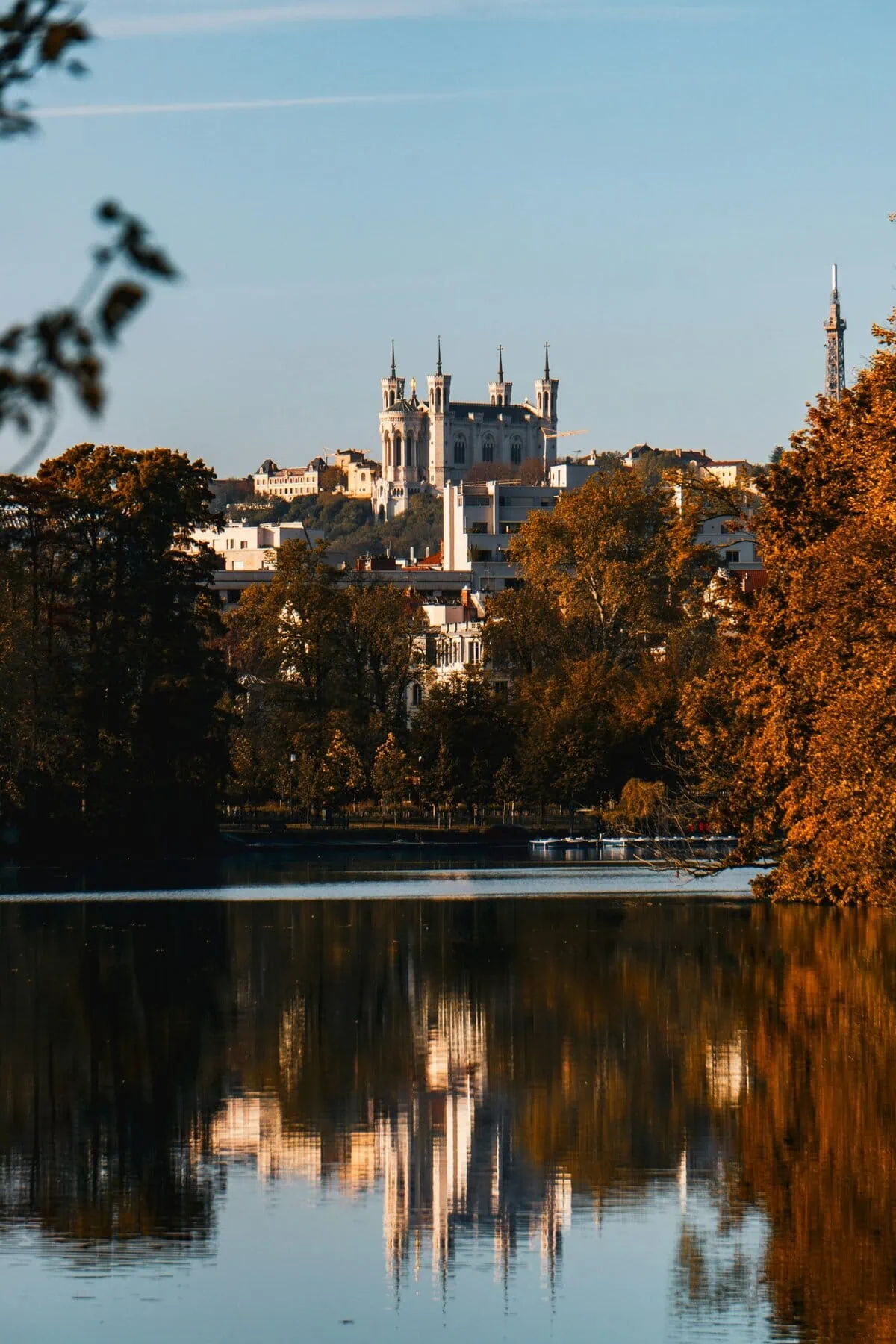
Table of Contents
- Lyon France Overview: Gastronomic Capital
- Getting to Lyon: Airport & Train Connections
- Vieux Lyon: UNESCO Renaissance Quarter
- Traboules: Secret Passageways of Lyon
- Fourvière Basilica & Roman Ruins
- Presqu’île: Lyon’s Central Peninsula
- Bouchons & Lyonnaise Cuisine
- Paul Bocuse Legacy & Michelin Dining
- Beaujolais Wine Region & Tours
- Croix-Rousse: Silk Weaving Quarter
- Confluence: Modern Lyon District
- Day Trips from Lyon
- Best Hotels in Lyon France
- Costs & Budgeting: Three Travel Styles
- Practical Tips & Local Knowledge
- Frequently Asked Questions
Lyon France Overview: Gastronomic Capital
Lyon evolved from Roman Lugdunum (founded 43 BC by Lucius Munatius Plancus as capital of Three Gauls province) through medieval ecclesiastical center to Renaissance silk trading hub (15th-17th centuries when Italian merchants established Lyon as European silk capital employing 30,000 weavers), creating layered urban fabric preserving Roman amphitheater, medieval-Renaissance Vieux Lyon, 19th-century silk workers’ Croix-Rousse quarter, and Belle Époque Presqu’île boulevards. The city’s strategic Rhône-Saône confluence position enabled trade route control connecting Mediterranean (via Rhône), Atlantic (via Saône-Loire), and northern Europe creating commercial prosperity funding architectural patronage establishing Lyon as France’s second city after Paris in population, economic power, and cultural significance through 19th century.
Lyon’s gastronomic reputation emerged from convergent factors: geographic positioning between Burgundy (wine, mustard, beef), Bresse (AOC Bresse chicken considered world’s finest), Dombes (pike for quenelles), Alps (cheese, charcuterie), and Rhône Valley (vegetables, fruit) creating exceptional ingredient access; substantial bourgeois merchant class demanding sophisticated dining; and Paul Bocuse’s 20th-century elevation of Lyonnaise cuisine to global prominence through his three-Michelin-star restaurant and nouvelle cuisine revolution demonstrating French gastronomy’s evolution beyond classical Escoffier formalism. The result: Lyon claims “World Capital of Gastronomy” title with 4,000+ restaurants (1 per 130 residents versus Paris 1 per 500), 17 Michelin stars currently, and indigenous bouchon bistro tradition impossible to replicate outside Lyon’s specific cultural-economic context.
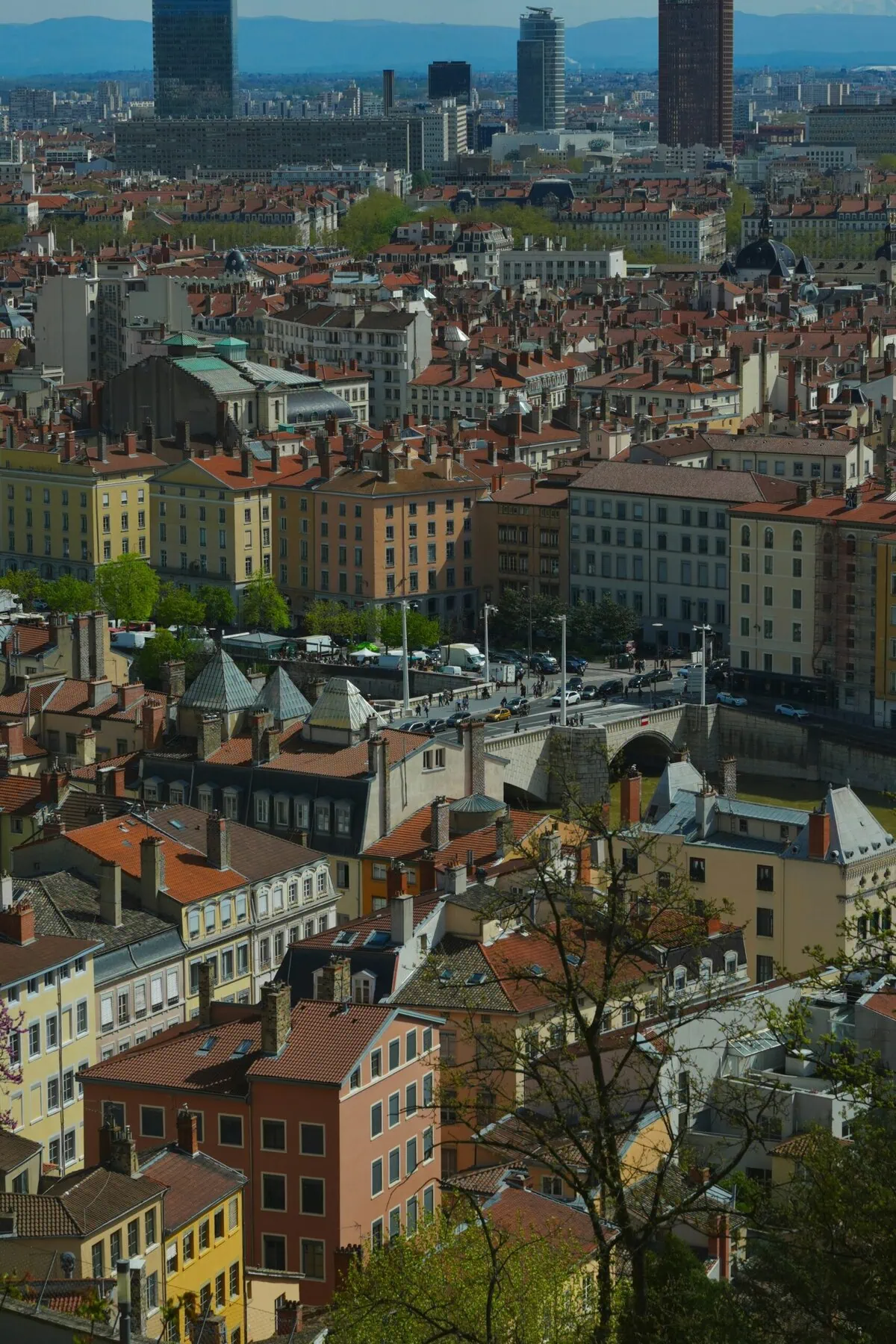
Unlike Paris’s overwhelming tourist density (30+ million annual visitors), Lyon maintains authentic working city character—520,000 actual residents living in historic center versus Paris’s hollowed-out core where locals fled tourism pressures. The UNESCO Vieux Lyon quarter (inscribed 1998) demonstrates Renaissance urban fabric preservation rivaling Florence—315 traboules (covered passageways), Italian-influenced loggias, stone facades creating atmospheric streetscapes impossible in Paris where Haussmann renovation destroyed medieval character. The positioning 2 hours from Paris via TGV, 90 minutes from Geneva Switzerland, and 5 hours from Nice France creates optimal exploration base accessing Alps, Burgundy wine, Provence, and Switzerland from single accommodation.
Getting to Lyon: Airport & Train Connections
Lyon-Saint Exupéry Airport (LYS) operates 25 kilometers east offering comprehensive European connections. The airport handles 11+ million passengers annually with major carriers including Air France, EasyJet, Lufthansa, Swiss providing connections to European hubs and direct services to London (1h25), Frankfurt (1h10), Amsterdam (1h25), Madrid (1h50), Rome (1h30). Rhônexpress tram operates airport-Lyon Part-Dieu station (30 minutes, €16.90 one-way, departures every 15 minutes 05:00-midnight). Taxis charge fixed €50 daytime €60 nighttime airport-city center, while executive chauffeur services cost €80-120 providing door-to-door luxury.
Lyon Part-Dieu and Perrache stations connect to TGV high-speed network. Paris-Lyon TGV requires 2 hours (€30-90 depending on booking advance, hourly departures), Geneva-Lyon 90 minutes (€25-55), Marseille-Lyon 1h45 (€30-70). Regional trains serve Beaune Burgundy wine capital (1h45, €20-35), Annecy Alps lakeside (2 hours, €15-30), Grenoble Alps (1h15, €15-25). The TGV connections enable practical multi-city combinations—arrive Paris CDG, TGV to Lyon, explore Rhône-Alpes, continue Nice Mediterranean or Milan Italy creating efficient itineraries. Helicopter services provide rapid regional connections—Lyon-Geneva 35 minutes (€6,000-10,000 per aircraft), Lyon-Chamonix Alps 45 minutes (€8,000-12,000), Lyon-Beaujolais wine tour 30-60 minutes (€5,000-8,000). For comprehensive helicopter charter pricing, see detailed guide.
Vieux Lyon: UNESCO Renaissance Quarter
Vieux Lyon (Old Lyon) occupies west Saône riverbank at Fourvière Hill base, preserving Europe’s most extensive Renaissance urban fabric after Venice and Florence—24 hectares containing 315 traboules, hundreds of Italian-influenced buildings (15th-17th centuries), medieval-Renaissance street patterns, and authentic neighborhood character where 3,000+ residents actually live. UNESCO World Heritage inscription (1998) recognized Vieux Lyon’s “outstanding example of medieval and Renaissance urban conservation” establishing protective regulations preventing modernization while enabling continued residential-commercial use maintaining living quarter character.
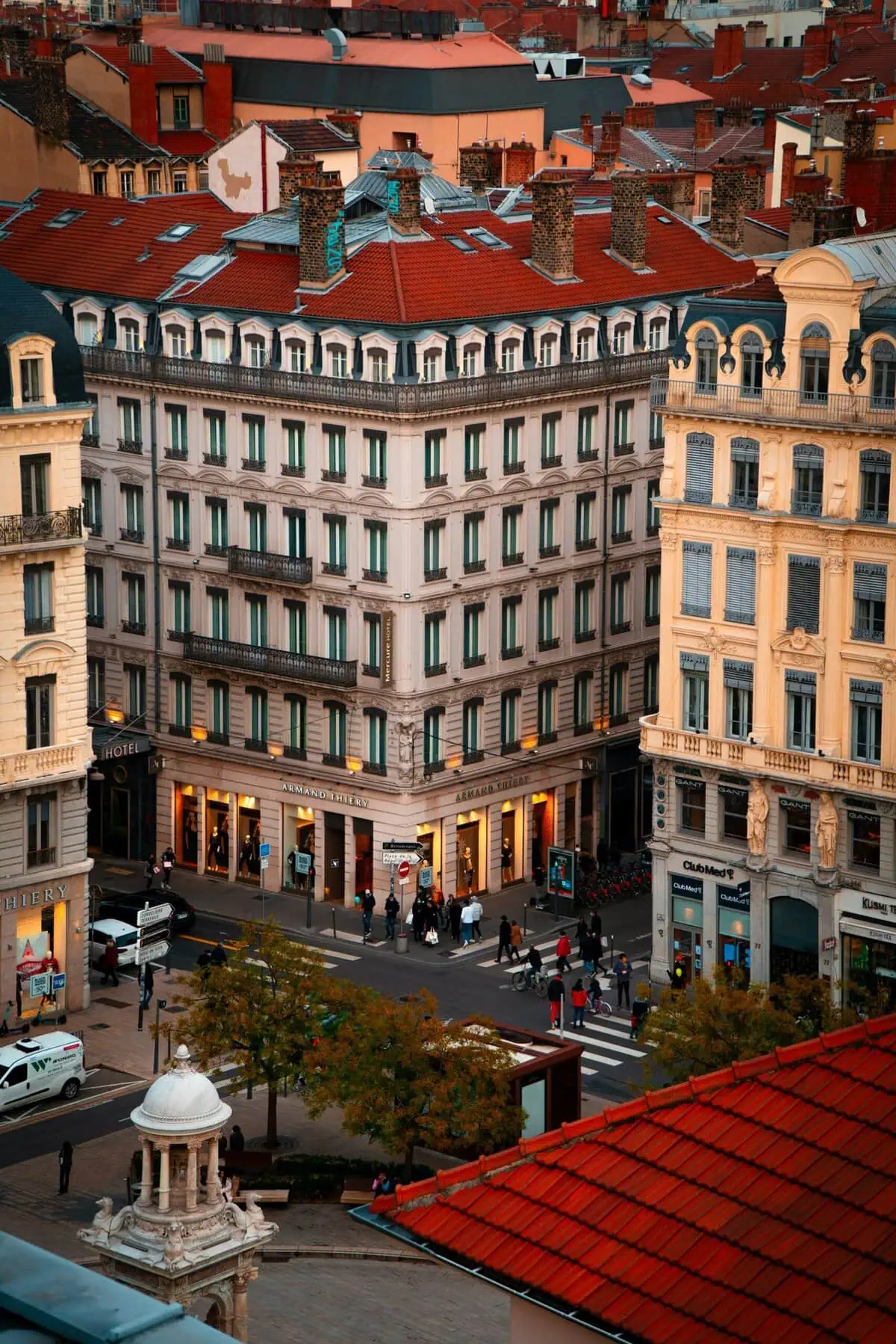
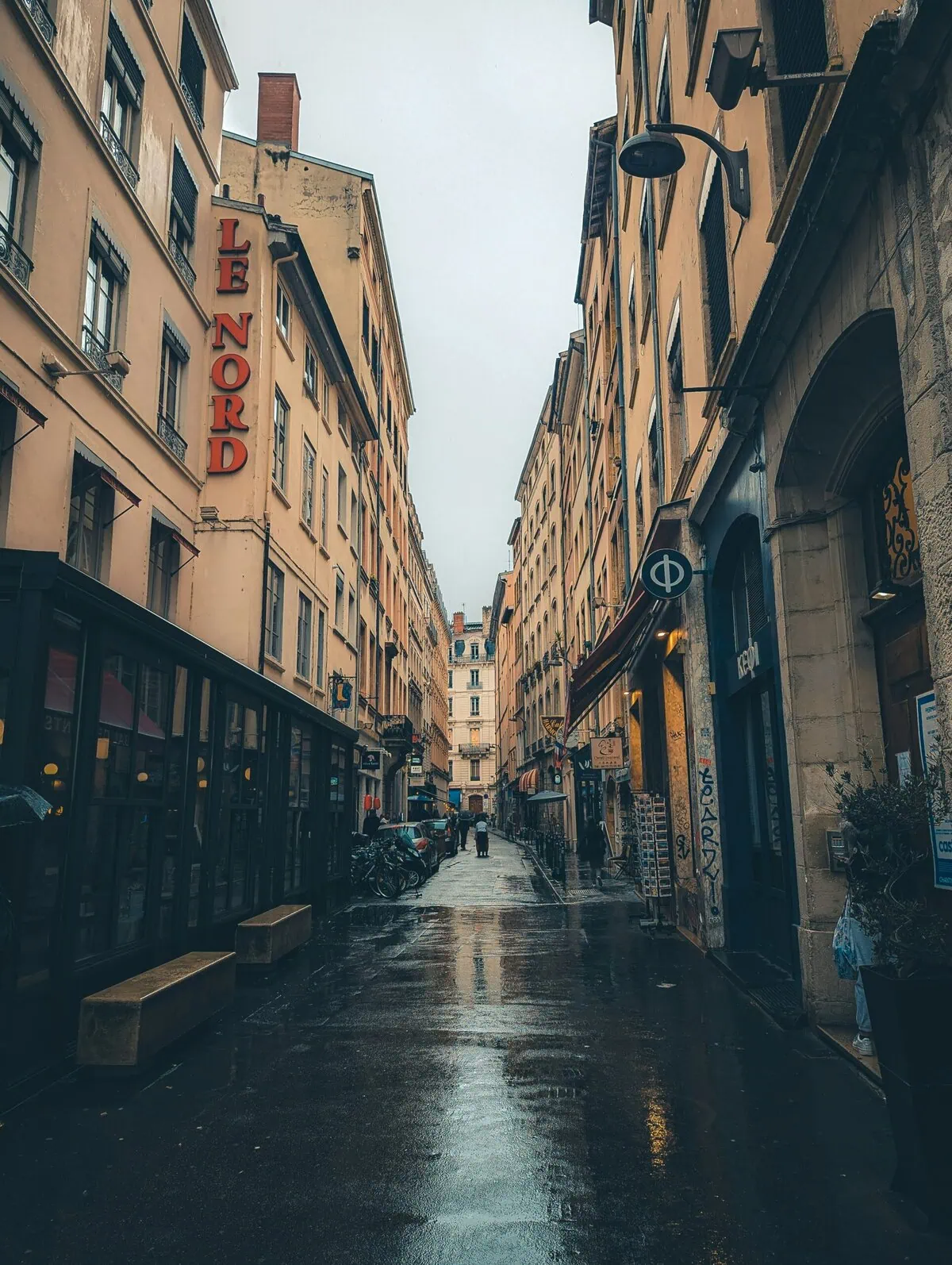
The quarter divides into three parishes: Saint-Paul (north, artisan quarter), Saint-Jean (central, commercial heart around cathedral), and Saint-Georges (south, silk workers). Rue Saint-Jean operates as main artery lined by boutiques, restaurants, gelato shops, while parallel rue Juiverie, rue du Boeuf, rue des Trois Maries maintain quieter residential character with hidden courtyards, Renaissance towers (tour rose, tour bonnevay), and traboule entrances creating atmospheric exploration. Cathédrale Saint-Jean dominates Vieux Lyon’s central square, constructed 1180-1480 combining Romanesque and Gothic reflecting 300-year building timeline. The cathedral houses remarkable 14th-century astronomical clock displaying religious calendar, zodiac positions, and mechanical figures performing hourly animations 12:00, 14:00, 15:00, 16:00 daily. Interior features 13th-century stained glass windows, gothic vaulting, and treasury displaying ecclesiastical vestments. Entry remains free 08:15-19:45 daily.
Traboules: Secret Passageways of Lyon
Traboules (from Latin “trans ambulare” meaning “to pass through”) represent Lyon’s unique architectural feature—315 covered passageways threading through buildings connecting parallel streets, crossing interior courtyards, incorporating staircases enabling pedestrian shortcuts. The passages originated medieval period enabling merchants transporting goods protected from weather, proliferated Renaissance when silk merchants required discrete fabric transport avoiding rain damage, and continued Croix-Rousse silk weaving quarter (19th century) where weavers moved delicate textiles between workshops through covered traboules versus exposing expensive goods to elements.
Approximately 40 Vieux Lyon traboules maintain public access daytime (typically 08:00-19:30, respect residential quiet hours), while others require resident codes or guided tour access. Famous public traboules include 27 rue Saint-Jean (longest public traboule connecting through multiple courtyards to rue du Boeuf), 54 rue Saint-Jean (beautiful Renaissance courtyard and gallery), Tour Rose hotel traboule (pink Renaissance tower staircase). Etiquette requires silence in residential sections, no photography of private apartments, closing all doors after passage. The passages served French Resistance WWII escape routes avoiding German street patrols, enabled 1830s silk workers’ Canuts uprising movements coordinating through hidden networks, creating distinctive Lyon urban experience where locals navigate interior shortcuts impossible for visitors lacking traboule knowledge.
Fourvière Basilica & Roman Ruins
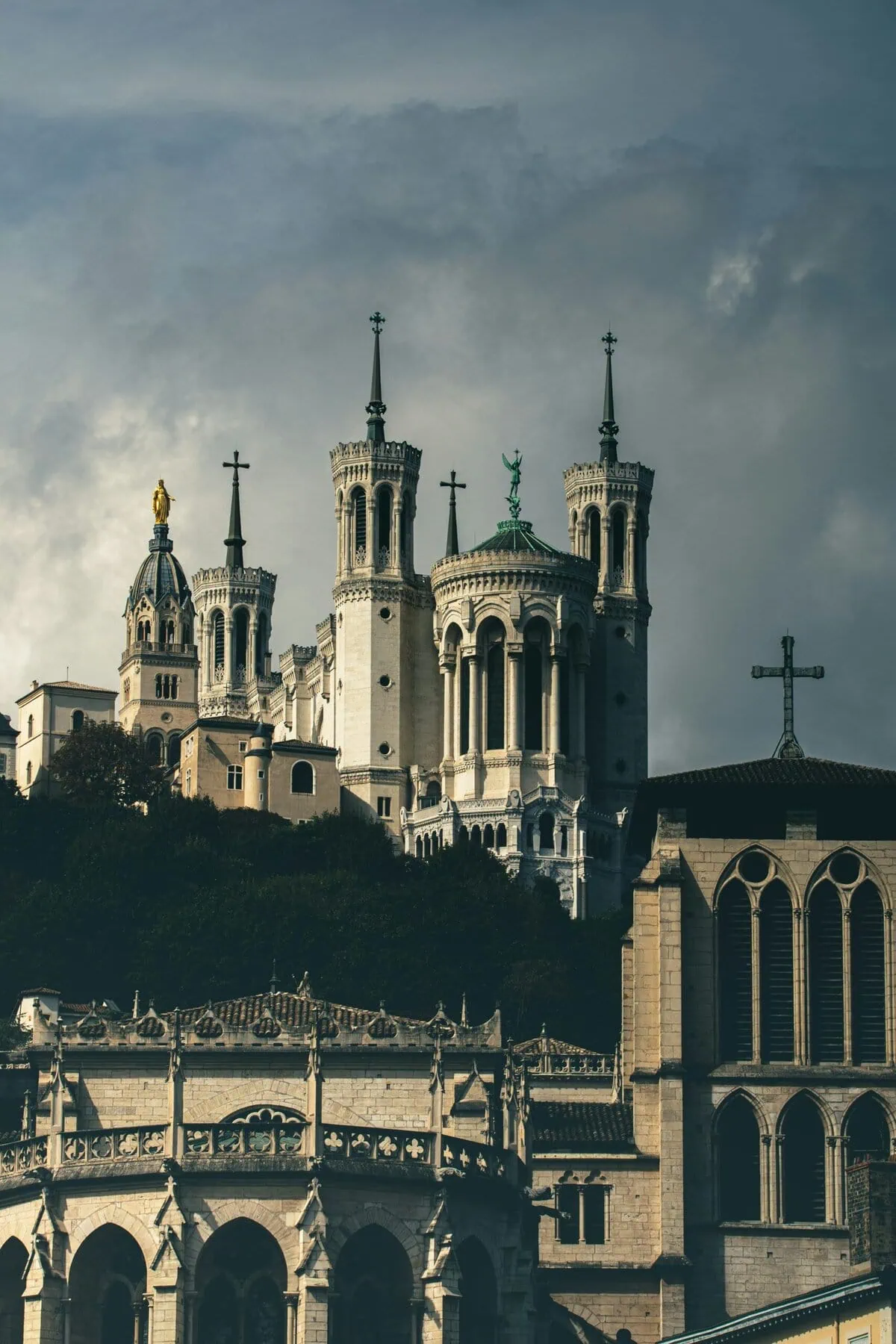
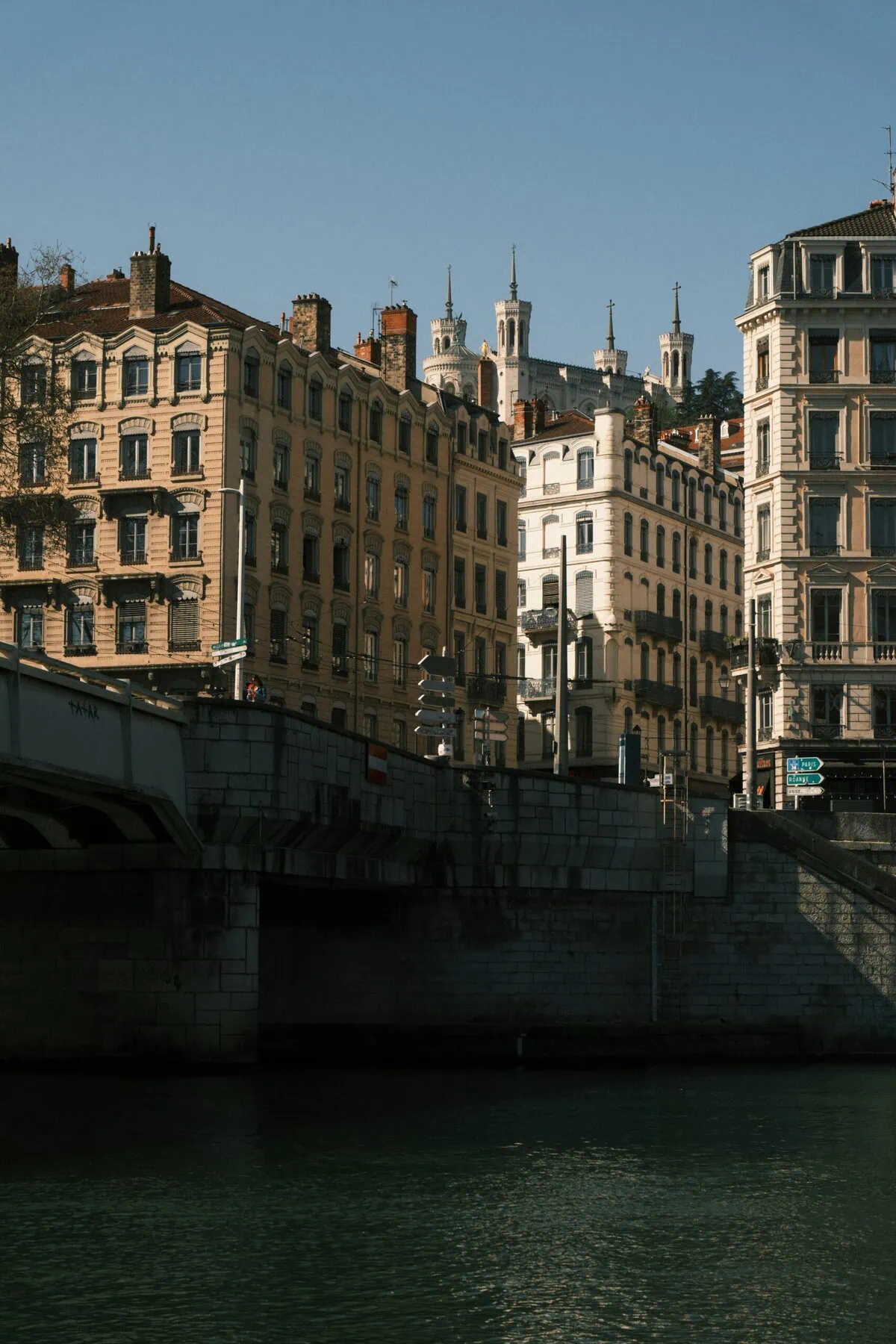
Basilique Notre-Dame de Fourvière rises 130 meters above Saône River, constructed 1872-1884 providing Lyon’s most recognizable landmark—white ornate Romanesque-Byzantine basilica visible throughout city. The basilica operates as Lyon’s spiritual-touristic anchor combining religious pilgrimage (Virgin Mary veneration), panoramic viewpoint (360-degree Lyon-Alps vistas), and architectural showcase (elaborate mosaics, sculptures, stained glass). Basilica entry remains free 08:00-19:00 daily with crypt museum (€6 adults) displaying treasury reliquaries, ecclesiastical vestments. Most visitors appreciate exterior panoramic terraces providing spectacular views: Presqu’île peninsula stretching between Rhône-Saône, Vieux Lyon medieval rooftops, modern Part-Dieu business district, and Alps horizon including Mont Blanc 150 kilometers distant clear days.
Adjacent to Fourvière Basilica, ancient Roman theaters demonstrate Lyon’s Lugdunum heritage as Gaul province capital founded 43 BC. The Grand Théâtre (seating 10,000, constructed AD 15) and smaller Odeon (3,000 seats, AD 120) create archaeological site offering summer concerts (Nuits de Fourvière festival June-July). Lugdunum Gallo-Roman Museum displays exceptional Roman artifact collections—mosaics, sculptures, pottery, jewelry—contextualizing Lyon’s ancient importance as Three Gauls capital. Museum entry costs €7 adults, €4.50 reduced, free first Sunday monthly, opening Tuesday-Sunday 10:00-18:00 requiring 90-120 minutes. Funicular railway departs Vieux Lyon metro station reaching Fourvière basilica in 2 minutes (€1.90, departures every 10 minutes 05:00-midnight), providing dramatic hillside ascent avoiding 30-minute uphill walk.
Presqu’île: Lyon’s Central Peninsula
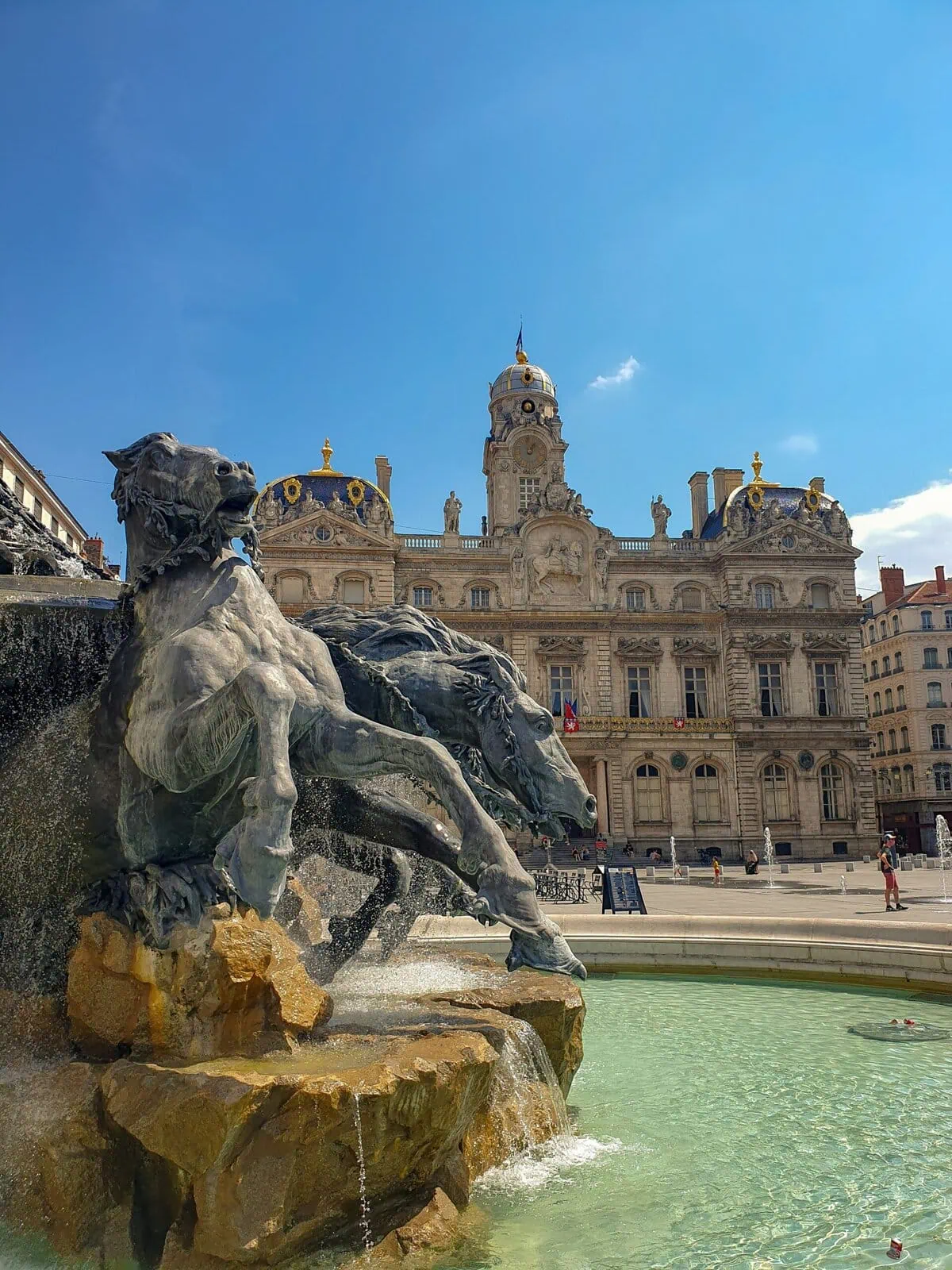
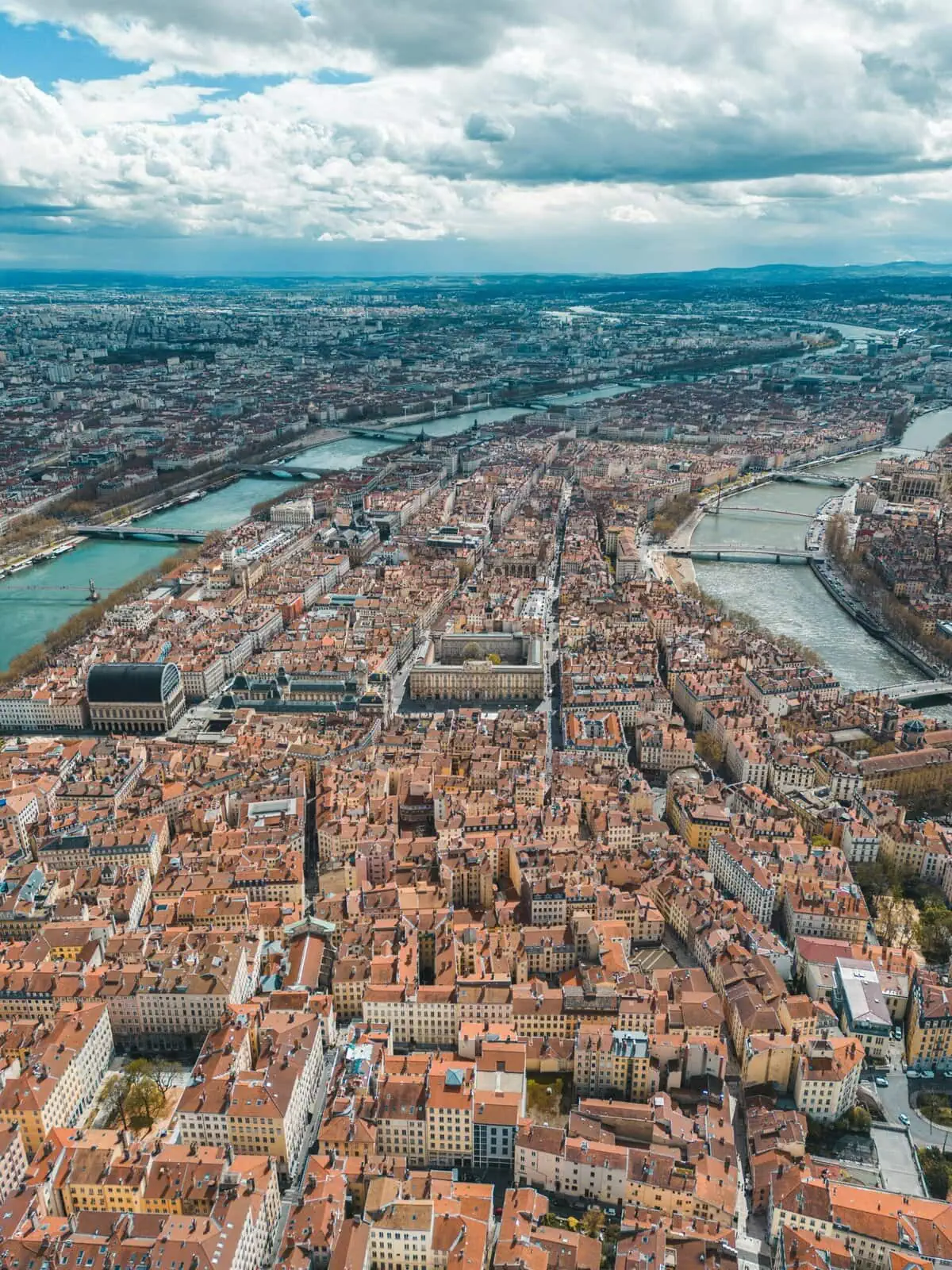
Presqu’île (“almost island”) occupies land between Rhône and Saône rivers extending 4 kilometers from Terreaux Square to Confluence point, creating Lyon’s commercial-cultural heart containing Place Bellecour (Europe’s largest open square at 62,000 m²), luxury shopping streets (rue de la République, rue du Président Édouard Herriot), Belle Époque grand hotels, and major museums. Place Bellecour operates as Lyon’s living room—vast pedestrian square featuring Louis XIV equestrian statue, seasonal installations, tourist information, and café terraces. Place des Terreaux occupies Presqu’île’s northern end dominated by Hôtel de Ville (Lyon City Hall) and Musée des Beaux-Arts (Fine Arts Museum). The Musée des Beaux-Arts ranks among France’s finest regional art museums—encyclopedic collections spanning Egyptian antiquities, Greek-Roman sculptures, medieval religious art, Renaissance paintings, Impressionists (Monet, Renoir, Pissarro), housed in former 17th-century Benedictine abbey with elegant cloistered courtyard. Museum entry costs €8 adults, €4 reduced, free first Sunday monthly, opening Wednesday-Monday 10:00-18:00 requiring 2-3 hours comprehensive visit.
Bouchons & Lyonnaise Cuisine
Bouchons represent Lyon’s unique culinary institution—traditional bistros serving Lyonnaise specialties in casual atmosphere with checkered tablecloths, wooden benches, handwritten menus, and hearty portions reflecting working-class gastronomic heritage. Authentic bouchons (certified by official Lyon bouchon association displaying brass plaque) maintain traditional recipes, atmosphere, pricing (€25-40 per person), and local clientele versus tourist-trap imitators charging premium prices for inferior preparations.
Signature Lyonnaise dishes include quenelles (pike fish mousse poached in sauce Nantua crayfish-based sauce), saucisson chaud (warm pork sausage in brioche with pistachios served with potato salad), tablier de sapeur (breaded-fried tripe marinated in white wine, literally “fireman’s apron”), andouillette (grilled chitterling sausage, strong flavor requiring acquired taste), cervelle de canut (literally “silk weaver’s brain,” fresh cheese mixed with herbs-shallots-white wine), salade lyonnaise (frisée lettuce, lardons, poached egg, croutons), and gâteau de foies de volaille (chicken liver cake terrine). Portions prove generous—appetizer, main, cheese, dessert creating substantial four-course meals requiring appetite and time (2+ hours typical bouchon dining).
Recommended authentic bouchons include Chez Paul (11 rue Major Martin, Vieux Lyon, family-run since 1920s, €30-40 per person, closed Sundays-Mondays, reservations essential), Le Poêlon d’Or (29 rue des Remparts d’Ainay, exceptional quenelles, €28-38, closed Sundays), Café des Fédérations (8 rue Major Martin, since 1872, boisterous atmosphere, €25-35, closed Sundays), Daniel et Denise (multiple locations, chef-driven bouchons maintaining tradition with elevated technique, €35-50), Café Comptoir Abel (25 rue Guynemer, oldest operating bouchon since 1928, authentic décor, €30-45, closed Sundays-Mondays). Bouchons operate limited hours—lunch 12:00-14:00, dinner 19:00-22:00—with many closing Sundays-Mondays requiring advance planning and reservations.
Paul Bocuse Legacy & Michelin Dining
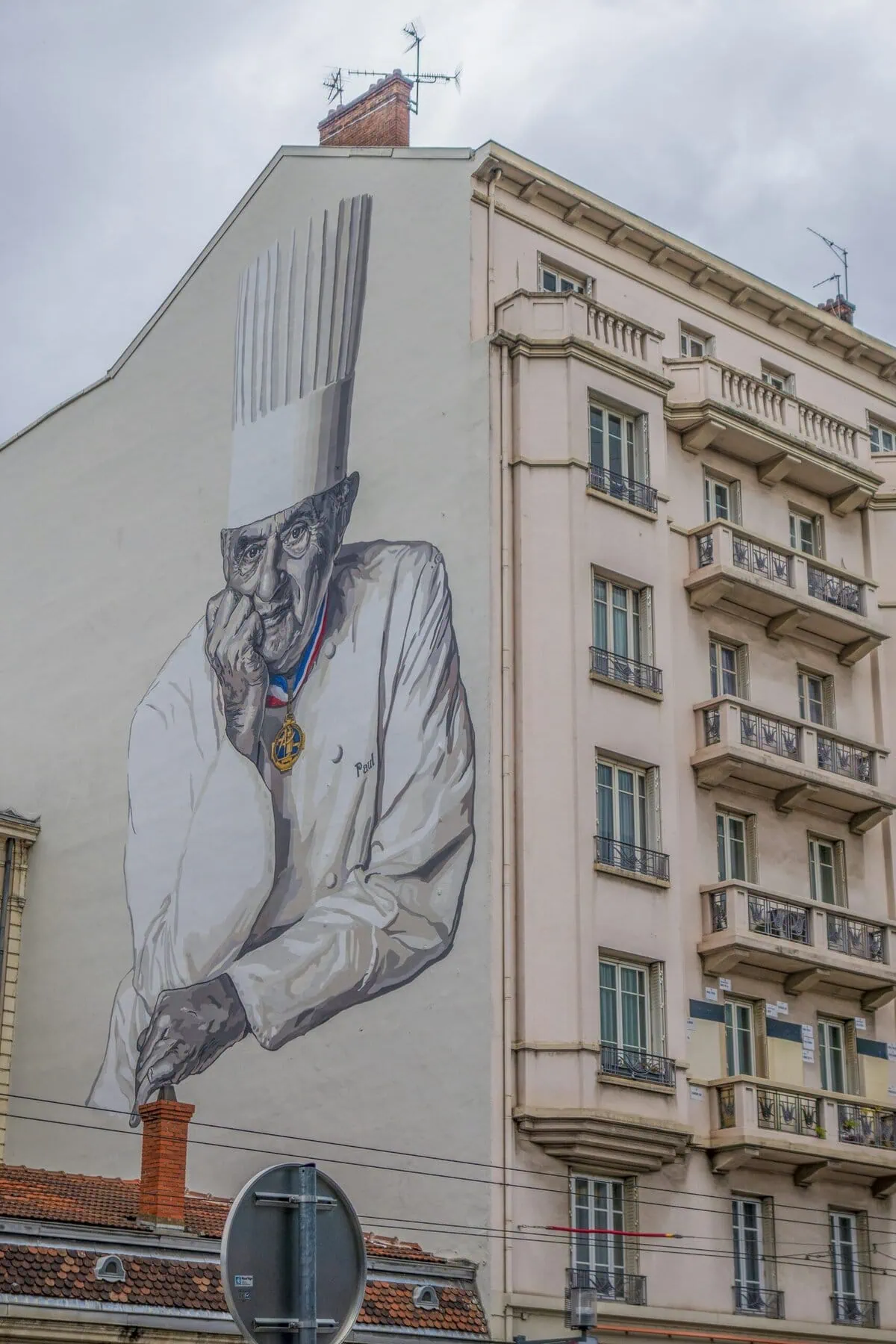
Paul Bocuse (1926-2018) transformed Lyon’s gastronomic reputation through his three-Michelin-star L’Auberge du Pont de Collonges (awarded third star 1965, maintained continuously until 2020—55 consecutive years, longest three-star tenure in Michelin history), nouvelle cuisine revolution emphasizing lighter preparations, and aggressive international promotion establishing Lyon’s “World Capital of Gastronomy” branding. The restaurant maintains Bocuse’s legacy through signature dishes—soupe aux truffes VGE (truffle soup under puff pastry created for French President 1975), loup en croûte (sea bass in puff pastry with lobster mousse), volaille de Bresse en vessie (Bresse chicken cooked in pig bladder). The restaurant operates lunch-dinner service (€195-295 menus, à la carte €150-250 per person excluding wine) in ornate dining rooms featuring original Bocuse décor maintaining formal service.
Beyond Bocuse legacy, Lyon maintains vibrant Michelin scene with 17 current stars across multiple establishments. Têtedoie (Fourvière hillside) holds one Michelin star serving contemporary French cuisine with panoramic Lyon views (€85-150 menus, reserve window tables). Prairial (Presqu’île) earned one star for market-driven seasonal cuisine emphasizing local producers (€65-95 menus). Les Loges (Cour des Loges hotel, Vieux Lyon) delivers one-star creative French cuisine in Renaissance courtyard setting (€75-120 menus). Mère Brazier (Terreaux) revives legendary Eugénie Brazier’s heritage holding two Michelin stars serving updated Lyonnaise classics in Belle Époque townhouse (€125-185 menus). Reservations essential all Michelin restaurants 2-4 weeks advance summer-autumn seasons.
Beaujolais Wine Region & Tours
The Beaujolais wine region stretches 50 kilometers north producing exclusively red-rosé wines from Gamay grapes across 22,000 hectares yielding 130 million bottles annually. Beaujolais divides into three quality tiers: Beaujolais AOC (basic appellation, €6-12 bottles, drink young) produces 55% of output including Beaujolais Nouveau released third Thursday November; Beaujolais-Villages AOC (38 villages, €8-15 bottles) bridges basic and crus; Ten Crus (northern granite hillsides, individual village appellations, €12-40 bottles, age 3-15 years) produce finest Beaujolais demonstrating terroir expression—Morgon (structured age-worthy wines), Moulin-à-Vent (“King of Beaujolais,” most Burgundy-like), Fleurie (“Queen of Beaujolais,” elegant floral), Juliénas (robust structured), Chénas (powerful concentrated), Saint-Amour (lighter elegant), Brouilly (approachable fruity), Côte de Brouilly (concentrated hillside), Régnié (fresh berry-fruit), Chiroubles (lightest most aromatic).
Multiple tour operators provide Beaujolais excursions from Lyon—half-day (€80-120 per person, 4-5 hours, 2 winery visits), full-day (€140-200, 8 hours, 3-4 wineries, lunch, comprehensive regional overview). Tours typically visit mix of well-known estates and smaller family domains enabling range from commercial operations to intimate family cellars. Recommended companies include Lyon Wine Tastings (English-language specialist, small groups 2-8 people, €160 full-day), Beaujolais Discovery (wine-focused, sommeliers guiding, €180 full-day). Self-drive enables flexibility (45-60 minutes Lyon to southern Beaujolais, 75-90 minutes northern crus) requiring advance winery reservations (most quality producers appointment-only), designated driver, and navigation through unmarked hillside roads. Key producers accepting visitors: Château des Jacques (Moulin-à-Vent), Marcel Lapierre estate (Morgon, natural wine legend), Domaine de la Madone (Fleurie, biodynamic). Optimal timing: September harvest (vendange atmosphere), spring April-May (vineyard flowering, quiet tasting rooms), summer weekends (warm weather, though busy).
Croix-Rousse: Silk Weaving Quarter
Croix-Rousse quarter occupies Lyon’s northern hilltop plateau historically housing silk weaving workshops (canuts) during 19th-century Lyon silk industry peak when 30,000 weavers operated Jacquard looms producing luxury fabrics for European nobility. The quarter maintains distinctive character—steep hillside streets, traboules connecting workshops to merchants, large-window apartments (required for natural light illuminating weaving work), bohemian atmosphere attracting artists-students-intellectuals, and village-like neighborhood character contrasting Presqu’île’s commercial formality. Croix-Rousse divides into Pentes (slopes descending toward Presqu’île, steep streets, trendy restaurants-bars) and Plateau (hilltop proper, residential calm, morning markets, local commerce).
Maison des Canuts (12 rue d’Ivry) operates as silk weaving museum-workshop demonstrating traditional Jacquard loom techniques, displaying historical fabrics, explaining Lyon silk industry development. Guided visits (€7.50 adults, €5.50 students, English/French tours hourly 11:00-17:00 Tuesday-Saturday) require 60-90 minutes including weaving demonstration where master weavers operate historic looms. Boulevard de la Croix-Rousse hosts Lyon’s premier daily market Tuesday-Sunday 06:00-13:00—150+ vendors selling regional produce from Rhône-Alpes farms creating authentic provisioning experience. The market atmosphere proves authentic versus tourist-oriented—vendors speak French primarily, pricing assumes local knowledge, quality surpasses supermarket offerings. Croix-Rousse village character emerges away from market crowds—small boutiques, neighborhood bistros (€15-25 lunch menus), corner bakeries, quiet residential streets. The Gros Caillou viewpoint at plateau’s eastern edge provides panoramic Lyon-Alps views rivaling Fourvière from northern perspective.
Confluence: Modern Lyon District
Confluence occupies Presqu’île’s southern tip where Rhône and Saône rivers merge, transformed from post-industrial wasteland to contemporary sustainable urban district (2003-2030 development timeline) through massive €2 billion public-private redevelopment creating 150 hectares mixed-use neighborhood featuring innovative architecture, sustainable infrastructure (solar power, green roofs, rainwater collection), contemporary cultural venues, and demographic diversity preventing pure gentrification.
Musée des Confluences (86 quai Perrache) operates as Confluence’s cultural anchor—contemporary science-anthropology museum housed in spectacular stainless steel-glass structure (Coop Himmelb(l)au architects, opened 2014, €200 million construction) featuring exhibitions on human origins, biodiversity, societies-civilizations, and science-technology. Museum entry costs €9 adults, €6 reduced, free under 18, opening Tuesday-Friday 11:00-19:00 Thursday until 22:00, weekends 10:00-19:00, requiring 2-3 hours comprehensive visit. Confluence architecture showcases contemporary European design diversity—Herzog & de Meuron’s museum dominates riverfront with crystalline metallic form, Jakob + MacFarlane’s Orange Cube features perforated orange panels, Odile Decq’s residential towers employ black-white angular geometries, Álvaro Siza’s social housing demonstrates minimalist elegance. Tramway T1 connects Bellecour to Confluence (15 minutes, €1.90) terminating adjacent to museum. The district suits half-day visit (2-3 hours) combining museum, architectural walking, riverfront cafés.
Day Trips from Lyon France
Lyon’s strategic positioning enables diverse day trip opportunities. Annecy sits 140 kilometers east (2 hours train €15-30, hourly departures) offering Alpine lakeside charm—medieval Vieille Ville (canals creating “Venice of Alps” designation), spectacular Lake Annecy (clearest lake in Europe, swimming-sailing), surrounding mountains creating dramatic scenery. The old town features Palais de l’Isle (12th-century castle on canal island), arcaded rue Sainte-Claire shopping, Saturday market. Pérouges occupies hilltop 35 kilometers northeast Lyon (40 minutes drive, limited public transport requiring car rental or tour) preserving extraordinary medieval character—cobblestone streets, half-timbered houses, fortified walls creating film-set perfection. The tiny village (80 residents) operates essentially as living museum with single hotel-restaurant, artisan boutiques. Geneva Switzerland requires 90 minutes train (€25-55, hourly service) enabling international day trip experiencing Swiss lakeside sophistication, UN headquarters, luxury watchmakers. Beaune sits 150 kilometers north (1h45 train €20-35) operating as Burgundy wine capital with Hospices de Beaune (15th-century hospital, Gothic architecture), Burgundy Wine Museum, surrounding Côte de Beaune vineyards (Pommard, Volnay, Meursault).
Best Hotels in Lyon France
Lyon hotel scene ranges from historic palaces to contemporary design properties with exceptional value versus Paris pricing (30-40% below equivalent Parisian hotels). Cour des Loges (6 rue du Boeuf, Vieux Lyon) occupies four Renaissance buildings interconnected around stunning interior courtyard (€280-450 doubles, €600-1,200 suites) combining historical character with contemporary luxury including Michelin-starred restaurant Les Loges, spa, wine bar. The property suits travelers prioritizing historical atmosphere, special occasions. Fourvière Hôtel (23 montée Saint-Barthélémy, Fourvière hillside) converts former 19th-century convent to contemporary design hotel (€160-280 doubles) featuring minimalist interiors, panoramic terrace overlooking Lyon, chapel-breakfast room, gardens. Hôtel Carlton (4 rue Jussieu, Presqu’île) provides reliable four-star comfort near Bellecour (€120-200 doubles) with efficient service, soundproofed rooms, breakfast buffet, central positioning. Hôtel du Théâtre (10 rue de Savoie, Presqu’île) delivers exceptional value budget accommodation (€70-110 doubles) with clean renovated rooms, Terreaux Square location, friendly service, basic amenities.
Costs & Budgeting: Three Travel Styles
Lyon operates at moderate French pricing—significantly below Paris (30-40% less accommodation-dining), comparable to Bordeaux-Marseille creating accessible destination for budget-conscious travelers while offering luxury experiences rivaling Paris quality without extreme Parisian premiums.
Budget Conscious (€520 per person, 6 nights)
This tier delivers authentic Lyon through strategic choices prioritizing free attractions, budget accommodation, market provisioning:
Budget hotel/hostel: €180-240 (6 nights, €30-40 per night doubles shared, €90-120 per person)
Market/supermarket meals: €120-180 (breakfast €3-5, lunch market €6-10, occasional restaurant €12-20)
One authentic bouchon dinner: €35-45 (essential Lyonnaise cuisine experience)
Public transport pass: €30 (6-day unlimited metro-tram-funicular)
Museum entries: €30-50 (Musée des Beaux-Arts €8, Musée des Confluences €9, Roman sites €7)
Beaujolais wine tasting: €25-40 (visit cooperative tasting rooms)
Total per person: €520-680
This budget requires accepting trade-offs—hostel/budget hotel, extensive self-catering, free activities (Vieux Lyon wandering, Fourvière views, Croix-Rousse market), single bouchon experience. Lyon’s free offerings prove substantial—Vieux Lyon traboules, Cathedral entry, Roman amphitheater exterior, Bellecour square, riverfront promenades enabling meaningful experiences without constant spending.
Comfortable Mid-Range (€1,400 per person, 6 nights)
This tier enables authentic Lyon with quality accommodation, regular restaurant dining, comprehensive attractions:
Mid-range hotel: €540-780 (6 nights, €90-130 per night doubles, €270-390 per person)
Restaurant dining: €450-600 (mix bouchons €30-40, mid-range bistros €25-35, one Michelin €80-120)
Museum entries/activities: €80-120 (comprehensive museum visits, Roman sites, guided tours)
Organized Beaujolais wine tour: €160-200 (full-day with lunch, transport, 3-4 wineries)
Annecy day trip: €50-80 (train €30 return, lunch, activities)
Wine/provisions: €60-100 (quality Beaujolais purchases)
Total per person: €1,400-1,900
This tier provides balanced Lyon exploration—quality central accommodation, regular bouchon dining experiencing Lyonnaise gastronomy properly, comprehensive museum coverage, organized Beaujolais tour eliminating self-drive complications, day trip expanding regional context. The pricing proves accessible for mid-career professionals or special trip allocations.
Luxury Experience (€3,800 per person, 6 nights)
This tier accesses Lyon’s finest offerings creating comprehensive luxury gastro-cultural immersion:
Luxury hotel: €1,260-2,100 (Cour des Loges/Fourvière Hôtel, €210-350 per night, €630-1,050 per person)
Michelin dining: €900-1,500 (Paul Bocuse €200-300, Mère Brazier €150-200, one-star €80-120, bouchons €40-50)
Private Beaujolais wine tour: €400-600 per person (private chauffeur, custom itinerary, premium domains)
Helicopter scenic flight: €150-300 per person (30-60 minute Beaujolais-Alps circuit, group split)
Premium wine purchases: €300-500 (cru Beaujolais cellaring, Burgundy selections)
Spa treatments: €200-400 (hotel spa, massage, treatments)
Cultural experiences: €150-250 (private guides, cooking class, opera tickets)
Total per person: €3,800-5,400
This tier creates definitive Lyon gastronomic experience—luxury historic accommodation, comprehensive Michelin dining from Bocuse temple to contemporary one-star creativity, private wine touring, helicopter aerial perspectives, extensive premium wine purchases. The experience suits serious food-wine enthusiasts, special occasions, or affluent travelers seeking France’s gastronomic capital at source.
Practical Tips & Local Knowledge
Lyon operates efficiently given substantial resident population, sophisticated infrastructure, and French organizational competence. France uses Euro currency with ATMs widely available (typical €3-5 withdrawal fees). Credit cards (Visa, Mastercard) see universal acceptance. Cash remains useful markets, small cafés, bakeries. Tipping operates differently than US—service compris means bills include mandatory service charge, with optional small additional tips (5-10% excellent service, round up to nearest Euro standard) versus American 15-20% automatic expectations.
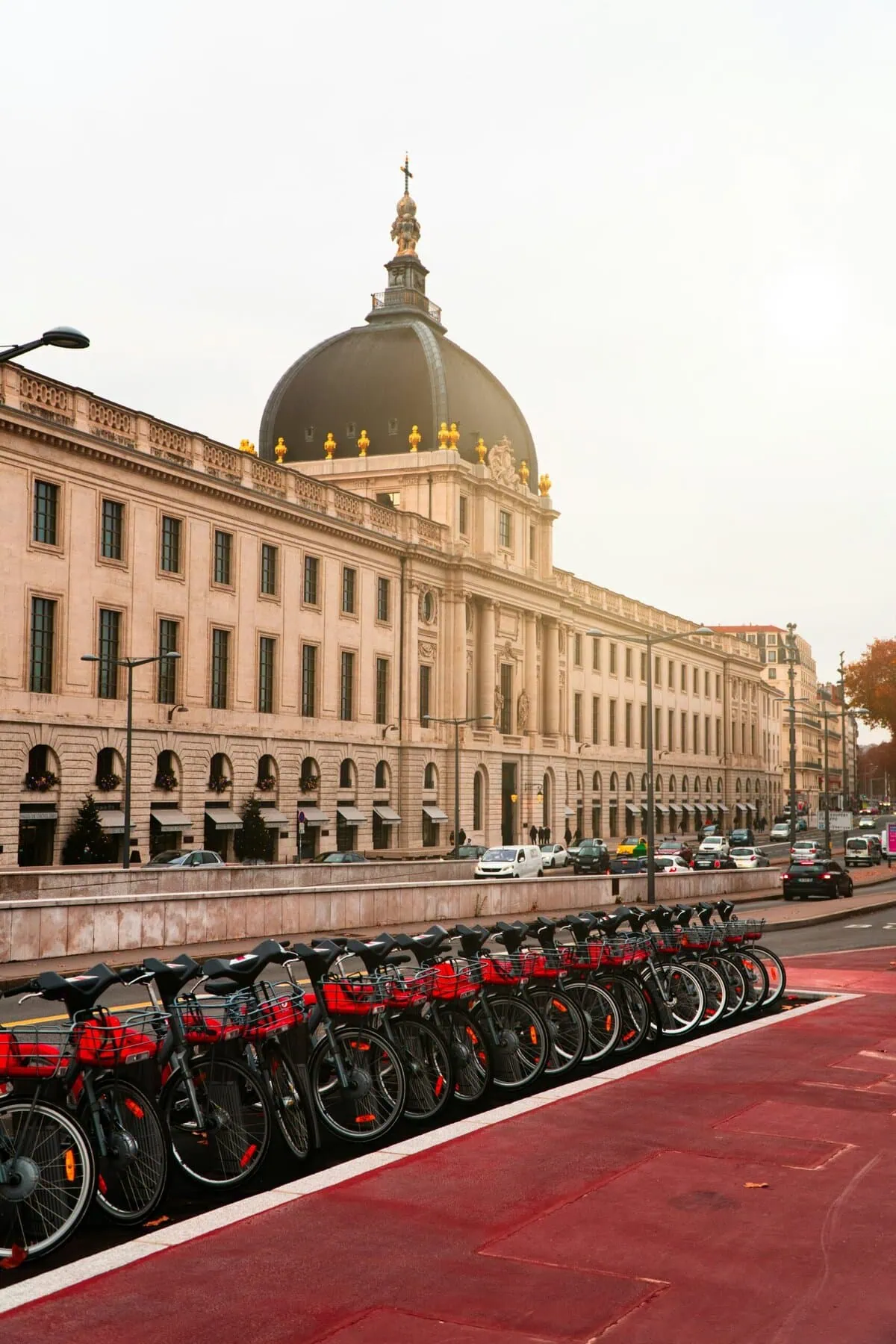
French remains primary language though English sees increasing usage luxury hotels-tourist restaurants. Basic French phrases prove essential—”Bonjour” (hello), “Merci” (thank you), “S’il vous plaît” (please), “L’addition s’il vous plaît” (The check please). Attempting French creates goodwill even butchered pronunciation. TCL (Transports en Commun Lyonnais) operates comprehensive metro (4 lines), tram (6 lines), bus (100+ routes), and two funiculars with unified ticketing. Single tickets cost €1.90 (valid 1 hour transfers), 10-journey carnet €17.20, 24-hour pass €6, 72-hour pass €16.90 enabling unlimited travel. Validate tickets at orange machines before boarding avoiding €60 fines.
Lyon experiences continental climate with cold winters (0-8°C December-February), mild springs (10-18°C March-May), warm summers (20-30°C June-August), pleasant autumns (12-20°C September-November). Optimal timing: May-June combines spring blooming, mild temperatures, moderate tourists. September-October delivers autumn beauty, harvest atmosphere, comfortable weather, reduced tourist numbers. December attracts Fête des Lumières visitors accepting cold 2-8°C for extraordinary light festival. Avoid late-July through August—peak heat 28-32°C, business-restaurant August closures (many establishments close 2-3 weeks), maximum tourist density.
Frequently Asked Questions
Is Lyon worth visiting?
Lyon justifies visiting for travelers interested in experiencing France’s gastronomic capital with authentic bouchon bistros, Paul Bocuse Michelin legacy, UNESCO Vieux Lyon Renaissance architecture, unique traboules secret passageways, Beaujolais wine region access, Roman Lugdunum heritage, sophisticated French urban culture without overwhelming Paris tourist density, and exceptional value (30-40% below Paris pricing for equivalent quality). The city appeals particularly to food-wine enthusiasts, architecture appreciators, curious travelers seeking authentic French experience beyond Paris clichés. However, Lyon disappoints travelers seeking beach vacations (Mediterranean 4 hours south), Alpine hiking (Chamonix 2h30), pure museum concentration (Paris surpasses for sheer quantity). The city works optimally as 3-5 day experience combined with Beaujolais wine touring, Alps day trips, or multi-city French itineraries.
How many days do you need in Lyon?
Lyon requires 3-4 days for comprehensive standard tourism covering Vieux Lyon and traboules, Fourvière Basilica and Roman amphitheater, Presqu’île boulevards and museums, bouchon dining experiences, Croix-Rousse silk quarter, Confluence contemporary district, Beaujolais wine tour (full-day excursion), creating balanced first-time itinerary. Five days enable adding Annecy Alps day trip, extended museum time, multiple bouchon meals, leisurely neighborhood wandering. Extended Lyon stays (6+ days) typically indicate using city as base for regional exploration (Burgundy, Geneva, Provence), attending specific events (Fête des Lumières December), intensive culinary tourism (cooking classes, multiple Michelin restaurants), or slow travel philosophy. Most visitors find 3-4 days providing satisfying Lyon exposure balancing major attractions with atmospheric enjoyment and strategic day trip expanding regional perspective.
What is Lyon known for?
Lyon gained recognition as France’s gastronomic capital with more Michelin stars per capita than Paris, indigenous bouchon bistro tradition serving Lyonnaise specialties (quenelles, saucisson, andouillette), Paul Bocuse’s legendary three-star restaurant (maintained stars 1965-2020, 55 consecutive years), UNESCO Vieux Lyon Renaissance quarter (24 hectares medieval-Renaissance architecture, 315 traboules secret passageways), Beaujolais wine region gateway (30 kilometers north producing 10 legendary crus from Gamay grapes), Roman Lugdunum heritage (founded 43 BC, served as Three Gauls capital, preserving 10,000-seat amphitheater), silk weaving history (Croix-Rousse quarter housed 30,000 weavers 19th century establishing “Silk Capital of World” status), Fête des Lumières (December light festival attracting 4+ million visitors), and strategic Rhône-Saône confluence positioning between Paris-Mediterranean-Alps-Geneva creating southeastern France regional capital.
How to get from Paris to Lyon?
TGV high-speed train provides optimal Paris-Lyon connection requiring 2 hours from Paris Gare de Lyon station to Lyon Part-Dieu or Perrache (€30-90 one-way depending on booking advance and flexibility, hourly departures 06:00-21:00). Book advance via SNCF.com or Trainline app for best prices (€30-45 purchasing 2-3 months ahead, €60-90 last-minute). First-class upgrade (€15-30 premium) provides larger seats, power outlets, quieter carriages justifying modest cost for 2-hour journey. Bus services (FlixBus, BlaBlaCar Bus) operate Paris-Lyon 6-7 hours for €15-30 appealing to extreme budget travelers accepting triple travel time. Driving requires 4h30-5h30 (460 kilometers via A6 autoroute, tolls €35-40, fuel €45-60) making car practical for Burgundy wine route stops or subsequent road trips versus pure Paris-Lyon point-to-point where train proves faster-cheaper-more comfortable.
Lyon vs Paris: which is better?
Lyon advantages include authentic gastronomy (bouchons, Michelin concentration, Beaujolais access), manageable size (520,000 enabling walking exploration versus Paris 2.2 million sprawl), UNESCO Vieux Lyon Renaissance preservation (superior medieval-Renaissance fabric versus Paris’s Haussmann renovation destroying historical character), lower costs (30-40% below Paris hotels-restaurants), reduced tourist density (maintaining working-city character versus Paris’s Disneyfied center), Beaujolais-Burgundy wine proximity, and Alps-Geneva-Switzerland regional access. Paris advantages include unmatched museum collections (Louvre, Orsay, Rodin, Picasso), iconic architecture (Eiffel Tower, Notre-Dame, Arc de Triomphe), comprehensive international cuisine, unlimited entertainment options, superior shopping, and global city prestige. Food-wine enthusiasts benefit dramatically from Lyon’s focused gastronomy versus Paris’s scattered expensive Michelin scene. Architecture-museum obsessives require Paris’s unequaled collections. Budget travelers find Lyon delivering better value and authentic French experience. Optimal strategy combines both cities—arrive Paris international hub (museum-architecture 3-4 days), TGV to Lyon (gastronomy-wine-regional exploration 3-4 days) creating comprehensive French experience.
Best bouchons restaurants Lyon?
Authentic certified bouchons include Chez Paul (11 rue Major Martin, traditional since 1920s, €30-40 per person, closed Sundays-Mondays, reservations essential), Le Poêlon d’Or (29 rue des Remparts d’Ainay, exceptional quenelles, €28-38, closed Sundays), Café des Fédérations (8 rue Major Martin, since 1872, hearty portions, boisterous atmosphere, €25-35, closed Sundays), Daniel et Denise (multiple locations, chef-driven bouchon maintaining tradition with elevated execution, €35-50), Café Comptoir Abel (25 rue Guynemer, oldest operating bouchon since 1928, authentic décor-atmosphere, €30-45, closed Sundays-Mondays). Avoid tourist-trap pseudo-bouchons along rue Saint-Jean lacking certification displaying inflated pricing (€40-60 per person) and inferior preparations. Genuine bouchons maintain €25-40 per person pricing, require reservations (walk-ins risky given limited seating), close Sundays-Mondays (traditional schedule), and serve local clientele alongside informed tourists creating authentic convivial atmosphere.
Things to do Lyon one day?
Optimal one-day Lyon itinerary: Start 09:00 Vieux Lyon (2-3 hours wandering streets, entering traboules, Cathedral visit, Renaissance courtyard exploration), funicular or walk to Fourvière Basilica 12:00 (30 minutes church-viewpoint), Roman amphitheater 12:30 (30 minutes, adjacent), descend for authentic bouchon lunch 13:00-15:00 (Chez Paul or Le Poêlon d’Or, essential Lyonnaise gastronomy, book advance), afternoon Presqu’île stroll 15:00-17:00 (Place Bellecour, rue de la République shopping, Terreaux Square), Musée des Beaux-Arts or Musée des Confluences 17:00-19:00 (choose one, both impossible single day), aperitif at Croix-Rousse wine bar 19:00-20:00, dinner at contemporary bistro or second bouchon 20:00-22:00. One day proves insufficient for proper Lyon experience—accept sampling versus comprehensive coverage, prioritize food experiences (two quality meals) over pure sightseeing, and plan return visit addressing inevitable omissions.
Is Lyon expensive?
Lyon operates at moderate French pricing—significantly below Paris (30-40% less accommodation-dining for equivalent quality), comparable to Bordeaux-Marseille-Nice, above smaller French cities creating accessible destination versus extreme Paris costs. Specific pricing: budget hotels €30-50 per person nightly, mid-range €70-130, luxury €150-350; bouchon meals €25-40 per person, mid-range bistros €20-35, Michelin dining €60-250+; metro tickets €1.90 single, museum entries €6-9, Beaujolais wine tours €140-200 full-day. Budget travelers manage Lyon comfortably (€60-80 daily including accommodation controlling costs through market meals, budget lodging, free attractions), mid-range visitors find excellent value (€100-150 daily enabling regular restaurant dining, quality hotels, comprehensive activities), luxury travelers access exceptional gastronomy at reasonable costs versus Paris’s extreme Michelin pricing.
Best time visit Lyon weather?
May-June delivers optimal timing—mild temperatures 16-22°C enabling comfortable walking, spring blooming gardens, longer daylight hours (sunset 21:00 June versus 17:00 December), moderate tourist levels versus summer peak, comprehensive cultural programming (Nuits de Fourvière festival begins June), and guaranteed Beaujolais vineyard accessibility. September-October provides excellent alternative—pleasant 14-20°C autumn weather, harvest atmosphere Beaujolais region (September vendange), reduced summer crowds post-August vacation exodus, autumn foliage, comfortable conditions for extensive walking. December attracts dedicated Fête des Lumières visitors (December 5-8) accepting cold 2-8°C temperatures, short daylight 08:30-17:00, potential rain for extraordinary light festival. Avoid late-July through August—peak heat 28-32°C uncomfortable for intensive walking, business-restaurant August closures creating service gaps, maximum tourist density.
Lyon 3 day itinerary?
Day 1 Vieux Lyon & Fourvière: Morning Vieux Lyon exploration 09:00-12:00 (Cathedral, traboules, Renaissance architecture), funicular to Fourvière Basilica 12:00-13:00 (church interior, panoramic terraces), Roman amphitheater 13:00-14:00, authentic bouchon lunch 14:00-16:00 (Chez Paul or Le Poêlon d’Or, advance reservation), afternoon Presqu’île stroll 16:00-18:00 (Bellecour, rue de la République, Terreaux Square), evening contemporary bistro dinner 19:30-22:00. Day 2 Museums & Croix-Rousse: Morning Musée des Beaux-Arts 09:30-12:00 (encyclopedic art collection), lunch Terreaux area 12:00-13:30, afternoon Croix-Rousse exploration 14:00-17:00 (Maison des Canuts silk museum, traboules, hilltop market Tuesday-Sunday, viewpoint), natural wine bar aperitif 17:00-19:00, dinner second bouchon 19:30-22:00. Day 3 Beaujolais or Day Trip: Full-day organized Beaujolais wine tour 09:00-18:00 (3-4 wineries, lunch at domain, cru tastings) OR Annecy Alps day trip (2 hours train, lakeside old town, return Lyon evening). This itinerary balances cultural attractions, gastronomic experiences, architectural exploration, museum time, and regional context.
What are traboules in Lyon?
Traboules represent Lyon’s unique architectural feature—315 covered passageways threading through buildings connecting parallel streets, crossing interior courtyards, incorporating staircases enabling pedestrian shortcuts. The term derives from Latin “trans ambulare” (to pass through) describing passages originated medieval period enabling protected merchant goods transport, proliferated Renaissance when silk merchants required discrete fabric movement avoiding weather damage, and continued 19th century Croix-Rousse silk weaving quarter where delicate textiles moved between workshops through covered corridors. Approximately 40 Vieux Lyon traboules maintain public daytime access (typically 08:00-19:30, respect residential privacy), while others require resident codes or guided tour access. Famous public examples include 27 rue Saint-Jean (longest public traboule connecting through multiple courtyards to rue du Boeuf), 54 rue Saint-Jean (beautiful Renaissance courtyard-gallery), Tour Rose hotel traboule (pink Renaissance tower staircase). The passages functioned as French Resistance WWII escape routes avoiding German street patrols, enabled 1830s silk workers’ Canuts uprising movements coordinating through hidden networks, and create distinctive Lyon urban experience where locals navigate interior shortcuts impossible for visitors.
Lyon food specialties must try?
Essential Lyonnaise specialties include quenelles (pike fish mousse poached in sauce Nantua crayfish-based sauce, Lyon’s signature dish requiring proper bouchon preparation achieving light texture), saucisson chaud (warm pork sausage with pistachios in brioche served with potato salad, substantial appetizer), tablier de sapeur (breaded-fried tripe marinated in white wine, literally “fireman’s apron”, acquired-taste offal preparation representing authentic workers’ cuisine), andouillette (grilled chitterling sausage, intense organ meat flavor requiring adventurous palate), cervelle de canut (literally “silk weaver’s brain,” fresh cheese mixed with herbs-shallots-white wine creating spreadable fromage blanc), salade lyonnaise (frisée lettuce, lardons, poached egg, croutons with vinaigrette, simple but perfectly-balanced traditional salad). Dessert specialties: tarte aux pralines (tart filled with crushed pink pralines creating distinctive color-sweet flavor), bugnes (fried dough pastries dusted with sugar, traditional Carnival-Easter treat), coussin de Lyon (marzipan chocolate ganache shaped like cushion). Wine pairing: Beaujolais crus (Morgon-Fleurie-Moulin-à-Vent) complement hearty Lyonnaise fare, served in traditional pots (46cl thick-bottom bottles) at bouchons creating authentic Lyon dining experience impossible to replicate outside region.
How to visit Beaujolais from Lyon?
Three options exist for Beaujolais wine touring from Lyon. Organized tours (€140-200 per person full-day) provide comprehensive experience including transport, guide expertise, 3-4 winery visits with tastings, lunch at domain or village restaurant, educational context. Recommended companies: Lyon Wine Tastings (English specialist, small groups, €160), Beaujolais Discovery (sommelier guides, wine-focused, €180). Self-drive enables flexibility visiting specific target domains (45-60 minutes Lyon to southern Beaujolais Brouilly-Régnié, 75-90 minutes northern Juliénas-Saint-Amour) requiring advance winery reservations (most quality producers appointment-only), designated driver (limiting tasting participation), navigation challenges through unmarked hillside roads. Key accessible producers: Château des Jacques (Moulin-à-Vent, reservations required), Marcel Lapierre estate (Morgon, natural wine legend), Domaine de la Madone (Fleurie, biodynamic). Public transport proves impractical—limited buses to Beaujolais villages, no train service, eliminating car-free touring forcing organized tour or rental car choices. Optimal timing: September harvest (vendange atmosphere), spring April-May (vineyard flowering, quiet tasting rooms), summer weekends (warm weather, vineyard picnics, though busy).
Lyon vegetarian restaurants options?
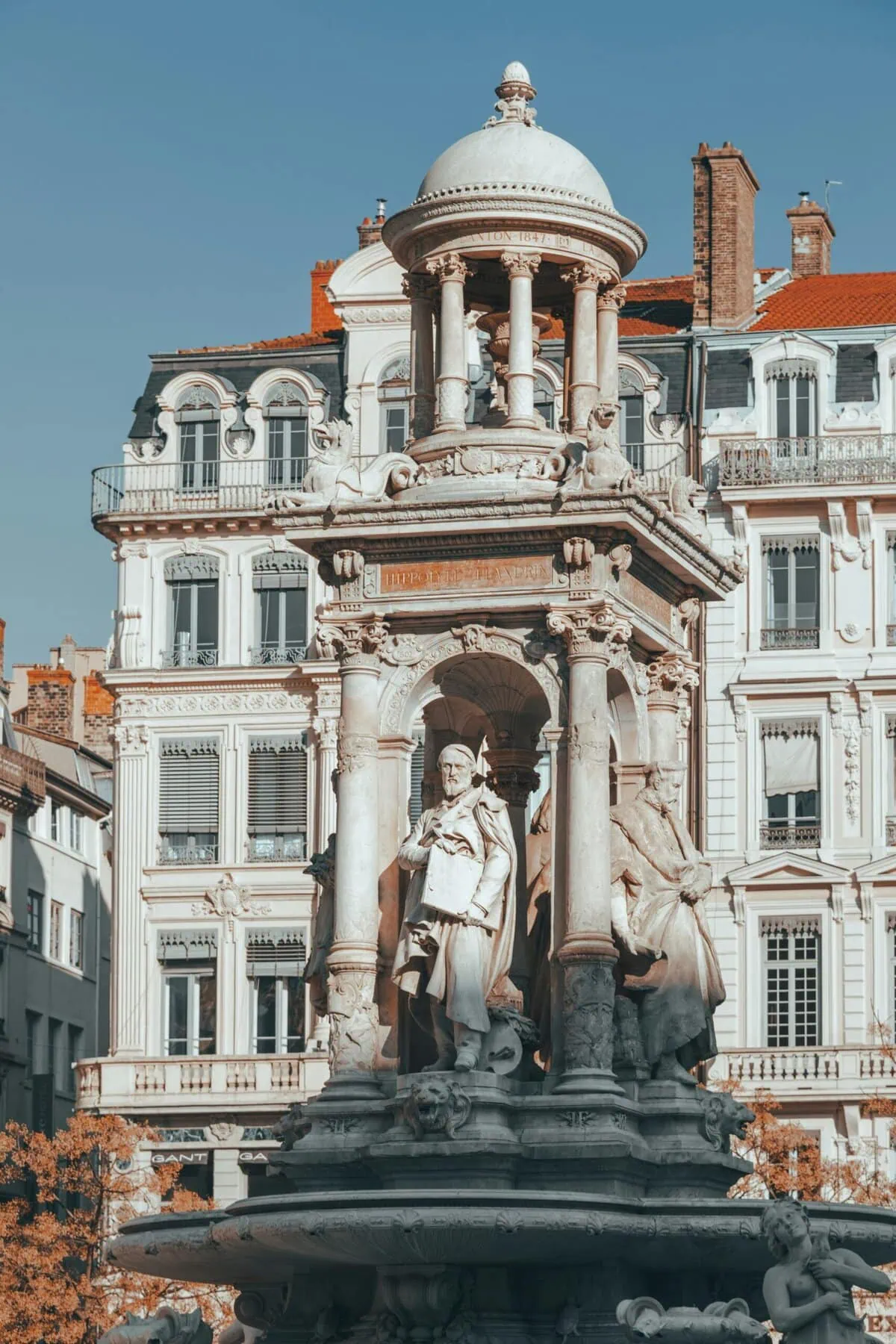
Lyon’s meat-heavy traditional bouchon cuisine challenges vegetarians, though contemporary restaurants increasingly accommodate plant-based dining. Le Potager des Halles (3 rue de la Martinière, Presqu’île) specializes vegetarian-vegan seasonal cuisine (€15-25 per person), Chez Marcelle (5 rue Hippolyte Flandrin) offers vegetarian bouchon interpretations maintaining traditional atmosphere with meat-free preparations, Loving Hut (33 rue de l’Arbre Sec) provides vegan Asian-fusion cuisine (€10-18), and contemporary bistros (Les Apothicaires, Le Kitchen Café, Substrat) typically include 2-3 vegetarian plates alongside meat-focused menus. Croix-Rousse and Guillotière quarters concentrate international restaurants (Lebanese-Japanese-Indian-Vietnamese) offering substantial vegetarian selections. Markets enable self-catering—fresh produce, cheese, bread, prepared salads creating picnic meals €5-10 per person. Bouchon modification proves challenging—traditional preparations resist vegetarian adaptation making vegetarian bouchon visits disappointing versus accepting Lyon’s meat-centric gastronomy or focusing contemporary restaurants. Advise restaurants advance (vegetarian/vegan requirements) enabling preparation. Lyon’s vegetarian scene continues improving given younger generation dietary shifts and immigrant cuisine diversity.
Lyon helicopter tours Beaujolais Alps?
Helicopter services provide luxury Beaujolais wine touring and Alps scenic flights from Lyon-Bron airport (8 kilometers east). Beaujolais wine tours (30-60 minutes flight time, €5,000-8,000 per aircraft, 4-6 passengers) enable aerial vineyard perspectives, rapid multi-domain access landing directly at premier estates, dramatic hillside touchdowns creating ultimate luxury wine tourism. Alps scenic flights showcase Mont Blanc, Chamonix valley, Lake Annecy, Alpine peaks—45-60 minute circuits cost €8,000-12,000 per aircraft. Extended routes include Lyon-Geneva 35 minutes (€6,000-10,000), Lyon-Chamonix 45 minutes (€8,000-12,000), Lyon-Beaune Burgundy 40 minutes (€6,000-9,000). Services require advance booking 24-48 hours peak season (May-September), often available same-day October-April. Weather dependency cancels flights given visibility requirements—plan flexible itineraries. For comprehensive European helicopter charter information, see detailed guide. Most passengers split costs among 4-6 passengers reducing per-person pricing €1,000-2,000 range making luxury helicopter experiences accessible affluent professionals versus exclusively ultra-wealthy billionaires.
Conclusion: France’s Underrated Gastronomic Capital
Lyon France rewards travelers approaching it as comprehensive destination versus brief stopover—gastronomic capital status with authentic bouchon bistros serving Lyonnaise specialties impossible to replicate elsewhere, Paul Bocuse’s Michelin legacy elevating French cuisine to global prominence, UNESCO Vieux Lyon preserving Europe’s finest Renaissance urban fabric after Venice-Florence, 315 unique traboules creating distinctive architectural experience, Beaujolais wine region proximity enabling cru exploration at source, Roman Lugdunum amphitheater demonstrating 2,000-year urban continuity, Croix-Rousse silk heritage revealing industrial-artisan history, contemporary Confluence district showcasing sustainable 21st-century urbanism, and sophisticated French urban culture maintaining authentic character Paris lost to overwhelming tourism. Success requires understanding Lyon’s distinct positioning—this isn’t pure beach vacation, overwhelming museum concentration, provincial village charm, or single-focus wine tourism, rather comprehensive urban experience combining gastronomy-architecture-history-wine-culture serving diverse interests.
The strategic southeastern France location creates optimal exploration base—2 hours TGV from Paris, 90 minutes Geneva Switzerland, 4h30 Nice Mediterranean, 2 hours Annecy Alps, 90 minutes Beaune Burgundy enabling comprehensive regional touring from single Lyon accommodation while maintaining sophisticated urban lodging. The positioning benefits food-wine enthusiasts particularly—Beaujolais access at source (30 kilometers), Burgundy proximity (Beaune 2 hours), Rhône Valley wines, and Lyon’s concentrated Michelin scene creating unparalleled French gastro-wine immersion impossible other locations requiring extensive travel accessing equivalent diversity.
Book Lyon accommodation considering seasonal factors—Fête des Lumières (early December) requires 3-6 month advance reservations commanding significant premiums, summer July-August peaks though business-restaurant August closures create service gaps, while shoulder seasons May-June and September-October provide optimal timing balancing weather-crowds-pricing. Reserve bouchon tables advance (essential Chez Paul, Le Poêlon d’Or, Daniel et Denise) avoiding walk-in disappointment at small establishments. Organize Beaujolais wine tours early (popular operators fill 2-4 weeks advance peak season) or coordinate self-drive winery appointments. Budget appropriately—Lyon operates 30-40% below Paris pricing enabling quality experiences accessible mid-range budgets (€100-150 daily per person including accommodation-meals-activities), though extreme budget travel (€50-70 daily) proves challenging given limited hostel options and restaurant-heavy culture.
Approach Lyon with realistic expectations—this sophisticated destination rewards curious travelers appreciating gastronomic depth, Renaissance-Roman architectural layering, authentic French urban culture, wine region access, and comprehensive city experience beyond single landmark photography. Recognize Lyon’s focused character combining culinary excellence with cultural-historical richness creating memorable French destination rivaling Paris for substance while maintaining human scale, accessible pricing, and authentic character impossible to find in over-touristed alternatives. Bon appétit et bon voyage—welcome to France’s true gastronomic capital where food, wine, history, and French art-de-vivre converge creating unforgettable experiences defining Lyon’s unique position as nation’s most underrated major city deserving recognition alongside Paris for comprehensive offerings, exceptional quality, and genuine substance.
Related Travel Guides
- Nice France Complete Guide – Mediterranean Côte d’Azur 4h30 south via TGV
- Monaco Complete Guide – Billionaire principality 5 hours south
- Milan Italy Complete Guide – Fashion capital 5 hours southeast
- Turin Italy Complete Guide – Piedmont capital 5h30 southeast
- Verona Italy Complete Guide – Romeo & Juliet 6 hours southeast
- Lake Como Italy Complete Guide – Luxury Italian lakes
- Geneva Switzerland Complete Guide – International hub 90 minutes
- Zurich Switzerland Complete Guide – Financial capital 4 hours
- Basel Switzerland Complete Guide – Art Basel tri-country
- Lausanne Switzerland Complete Guide – Olympic capital Lake Geneva